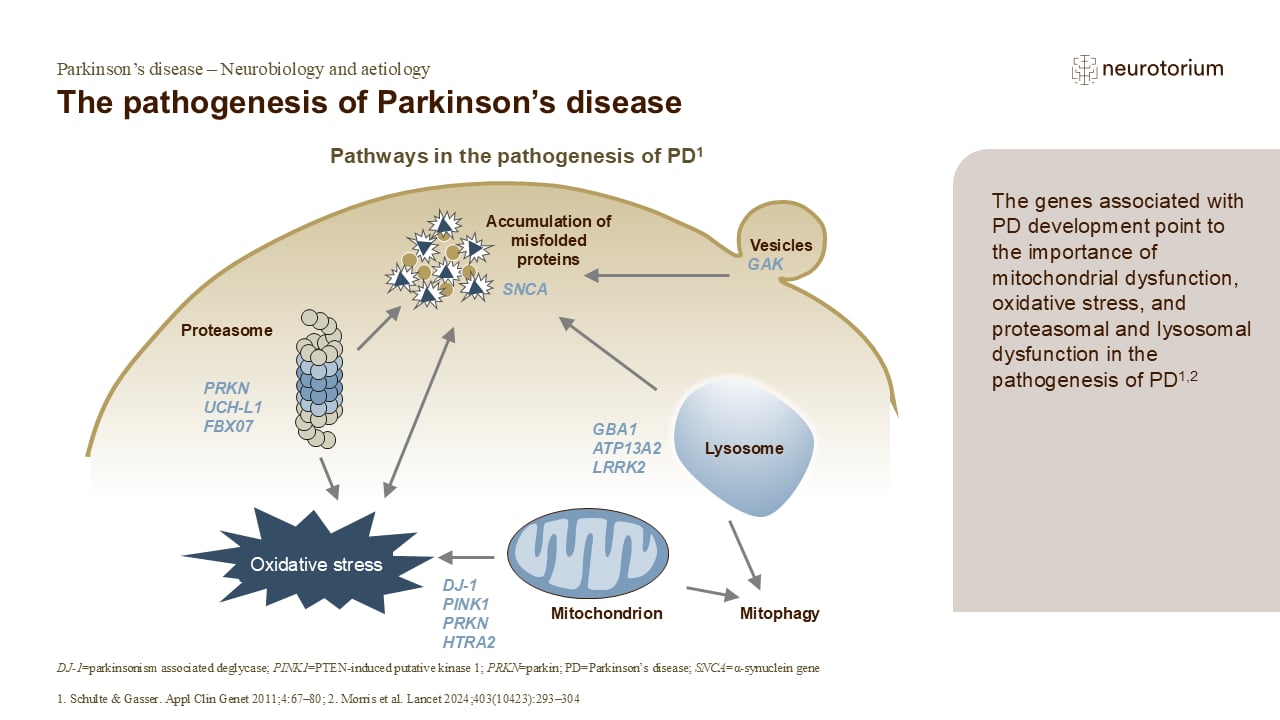
The pathophysiological development of PD is highly complex, research from the field of genetic epidemiology has shown that certain key processes involved in cellular metabolism may play important roles.1,2 Of particular importance are the processes involved in degrading misfolded proteins, such as α-synuclein.1 Degradation is normally effected by lysosomes and proteasomes, which break down old or abnormal proteins.1 However, in PD these processes can become impaired, leading to an accumulation of fibrillar, misfolded α-synuclein in the cell.1
The pathogenesis of Parkinson’s disease