

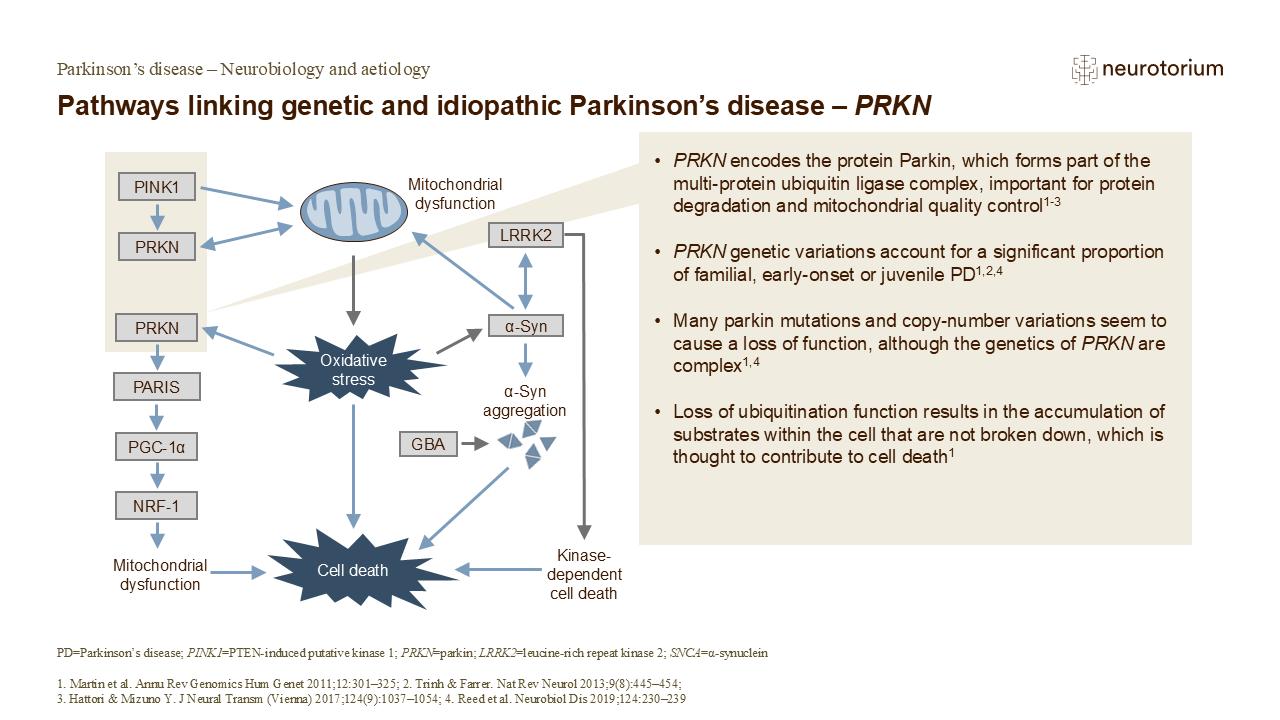
Parkin is a ubiquitin ligase found primarily in the cytoplasm of the cell.1,3 It ‘tags’ proteins to facilitate their proteasomal degradation.1-3 Loss-of-function mutations in parkin are associated with familial PD.1,3
Both parkin and PINK1 (a related protein that regulates Parkin) function in a mitochondrial quality control pathway that may become defective in cases of PD.1,4,5 In a healthy individual, PINK1 detects dysfunctional mitochondria, and then signals their removal by parkin-mediated mitophagy.6 Loss-of-function mutations in either PINK1 or PRKN may therefore allow the continued survival of damaged mitochondria.6
In addition to their effects on mitophagy, loss-of-function PRKN mutations lead to upregulated expression of PARIS, a protein that would normally repress PGC‑1α.6 Since one of the key roles of PGC-1α is to promote mitochondrial biogenesis, the higher levels of PARIS inhibit the production of new mitochondria.6 PRKN mutations in this way exert an effect on mitochondrial health within the cell, leading to increased levels of reactive oxygen species (owing to mitochondrial dysfunction) and neuronal cell death.6