

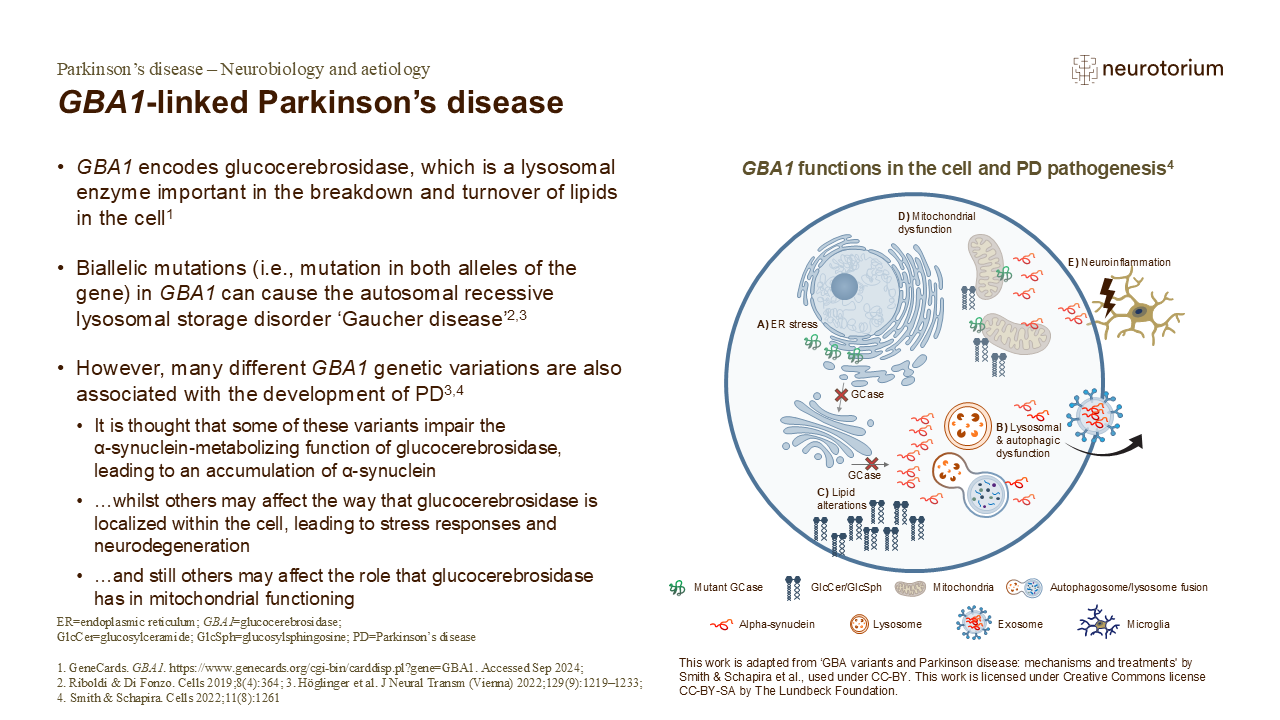
Gaucher disease is a rare, autosomal recessive disease caused by mutations in the GBA1 gene, which encodes the enzyme glucocerebrosidase.4,5 This enzyme is required for the normal function of lysosomes – a component of the cell that degrades unwanted materials.1,3,5 It was in the treatment of Gaucher disease that researchers noted that there were higher proportions of patients with PD than would otherwise be expected, highlighting GBA1 as a shared risk factor for both Gaucher disease and PD.4 The increasing understanding of GBA1-driven PD pathology has led to some promising avenues of treatment research, including the idea of using virus vectors to deliver wild-type glucocerebrosidase to neurons, and the use of small molecule chaperone proteins to increase the levels of properly folded glucocerebrosidase within cells.2
References:
1.GeneCards. GBA1. Available at: https://www.genecards.org/cgi-bin/carddisp.pl?gene=GBA1. Accessed September 2024.