

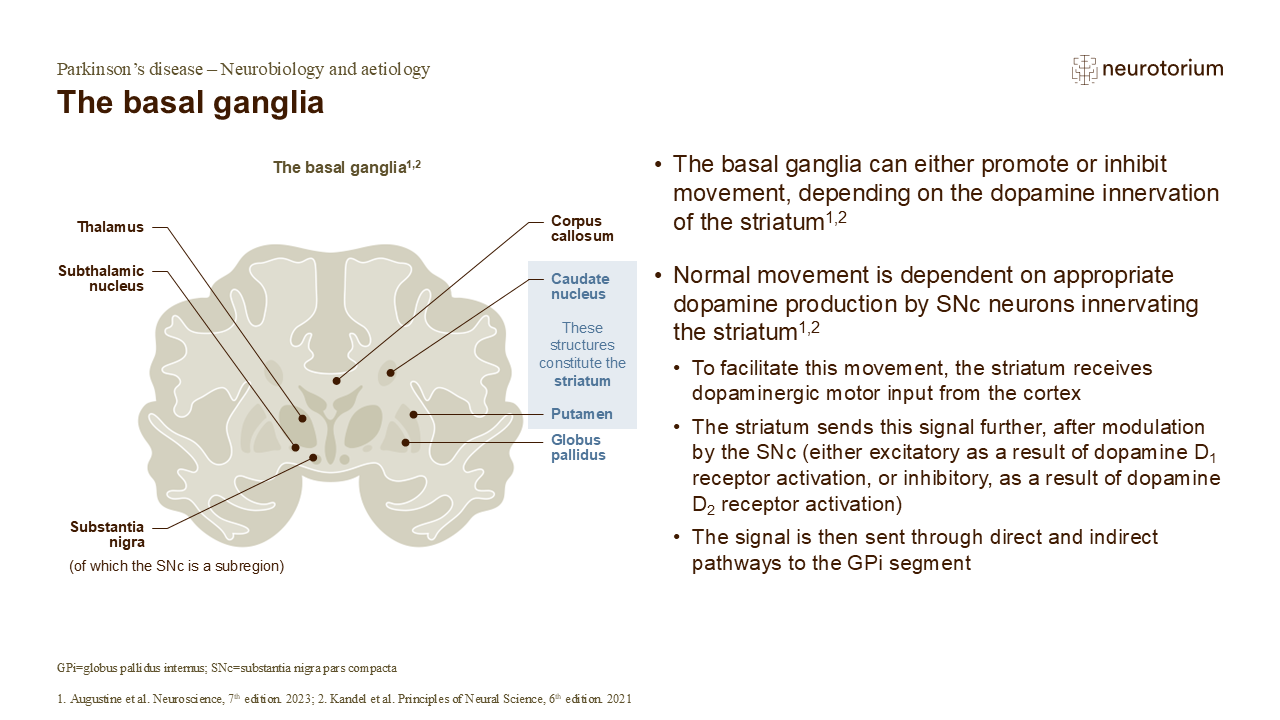
Normal motor function is the result of complex and intricate interactions between the basal ganglia, the cerebellum, and the cerebral cortex.3 The main function of the basal ganglia is to initiate motor activity and to control cortical outputs – indirectly through the thalamus – that relate to motor function.3
All four lobes of the cerebrum (frontal, parietal, occipital, temporal), the thalamus and the brainstem contain projections to the ‘input’ nuclei of the basal ganglia – mainly the caudate nucleus and putamen.3 The caudate nucleus is associated primarily with cognitive function and less so with motor activity, whereas the putamen is associated primarily with motor functions.3
These input nuclei then project to the globus pallidus, which in turn relays the output of the basal ganglia, via the thalamus, to the motor and other areas of the frontal cortex.3
In addition to its well-known role in motor function, it is now increasingly realized that the basal ganglia are involved in numerous non-motor functions.3,4 Disturbances of the basal ganglia can therefore result in impaired cognition, perception, and emotional behaviour.3,4
References:
1.Augustine GJ, Groh JM, Huettel SA, et al. Neuroscience, 7th edition. New York, USA: Oxford University Press, 2023.