
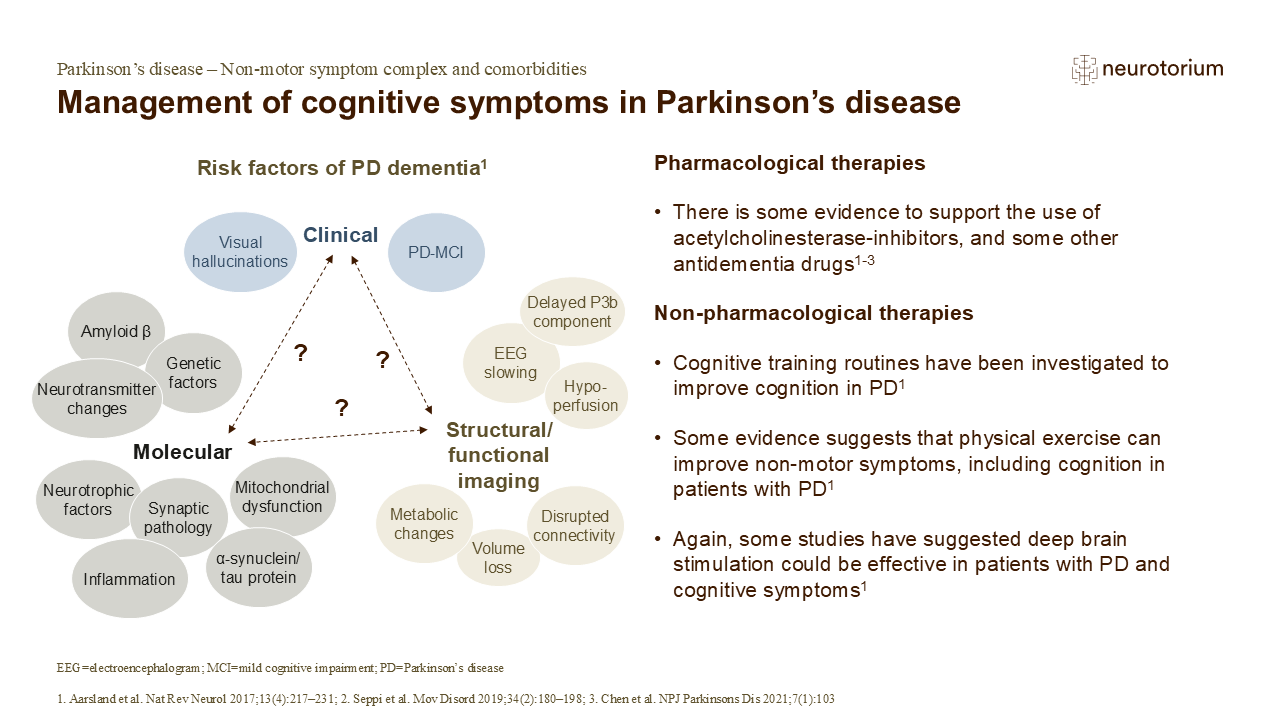
The risk factors for PD dementia can be grouped into clinical, molecular, and structural/functional imaging risk factors – as depicted on the slide.1
Several potential therapies and interventions have been proposed or researched to tackle the cognitive symptoms of PD, and whilst there is now some good evidence that certain pharmacotherapies are effective in patients with PD and cognitive symptoms, more good-quality placebo-controlled trials are needed.1-4 A disease-modifying therapy that can slow the progression of PD, and delay the onset of dementia, is an urgent unmet need.1,5
References:
1. Aarsland D, Creese B, Politis M, et al. Cognitive decline in Parkinson disease. Nat Rev Neurol 2017; 13 (4): 217–231.