

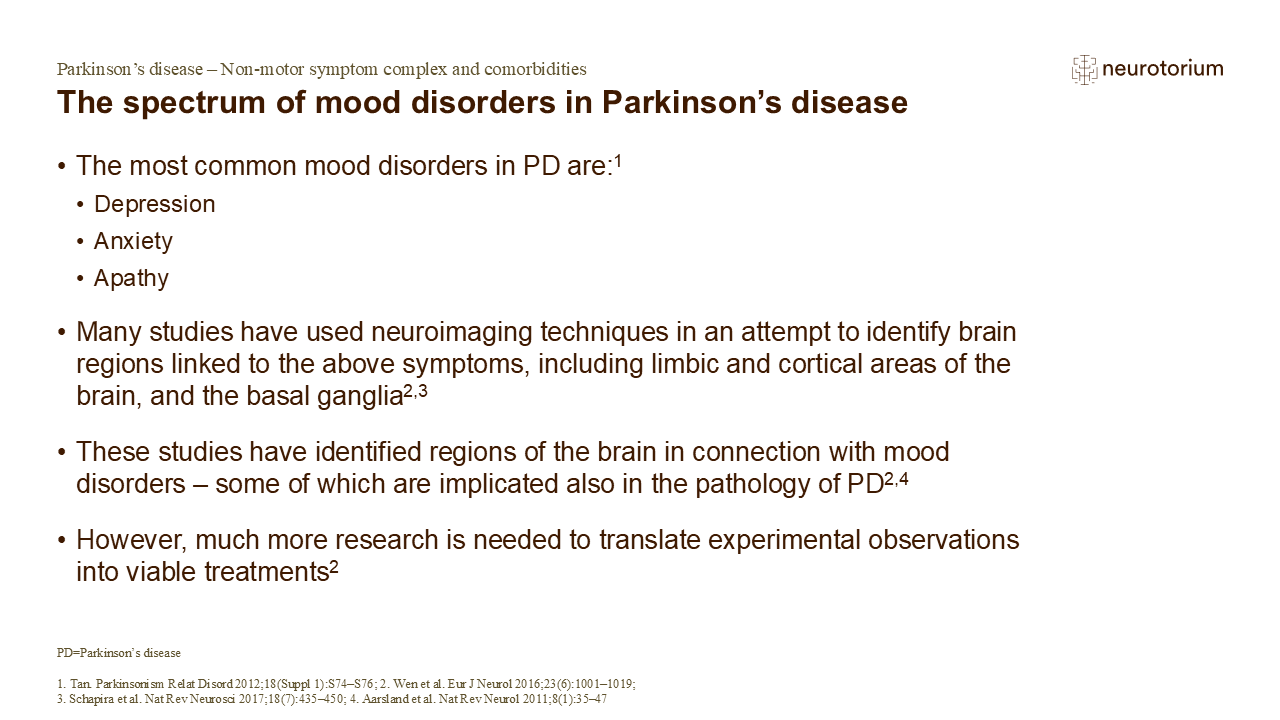
Mood disorders have been associated with significant morbidity and mortality in patients with PD, and are a major determinant of quality of life.5
Depression, anxiety, and apathy are common in PD and may precede the appearance of motor symptoms in some patients.5-7 The onset of depression and anxiety probably reflects changes to the production and effect of several key neurotransmitters.5 During later stages of PD, ‘OFF’ periods associated with low levels of dopamine in the brain can trigger anxiety, occasionally so severely as to induce panic attacks that require emergency care.5
Apathy refers to a set of behavioural, emotional and cognitive features that involve reduced interest and motivation in goal-directed behaviours, indifference, and flattened mood.1 Although these features are often experienced during clinical depression, they can also exist by themselves and may therefore be considered a distinct clinical entity.2
References:
1. Tan LC. Mood disorders in Parkinson’s disease. Parkinsonism Relat Disord 2012; 18 (Suppl 1): S74–S76.