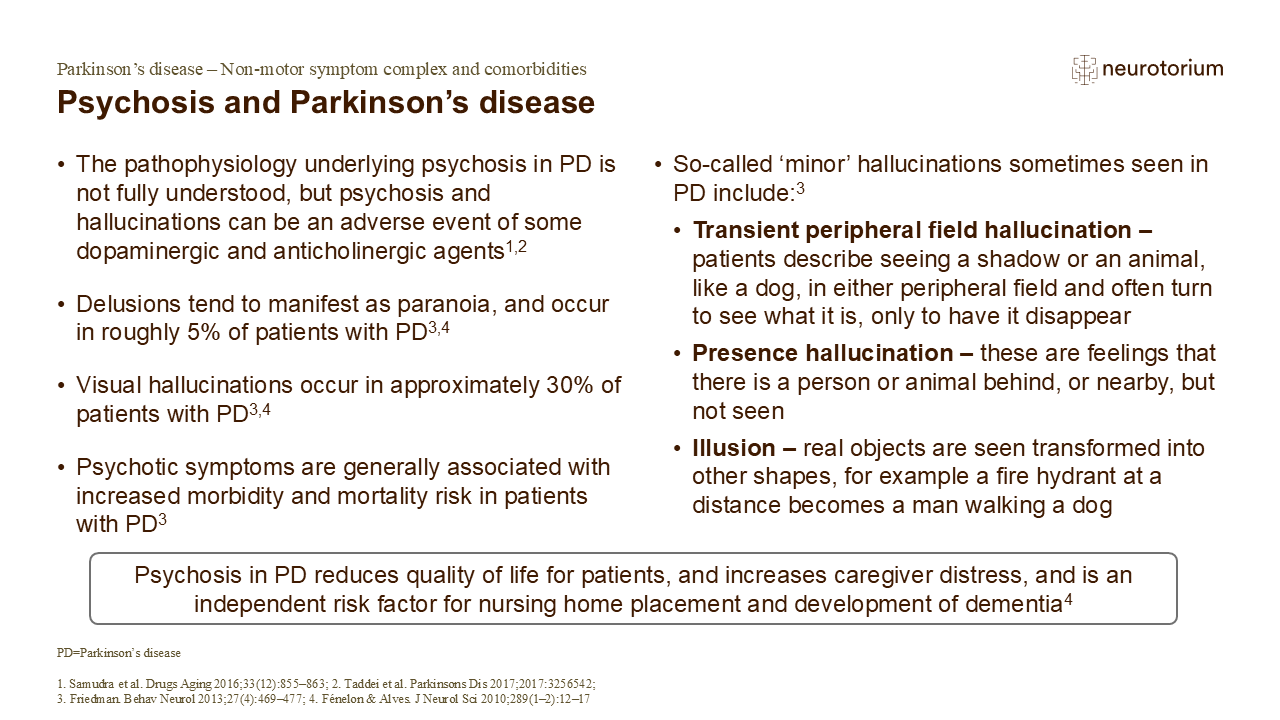
Psychotic symptoms are a frequent feature of PD as the disease progresses, and can have a major effect on patient quality of life, as well as that of caregivers.1 Treatment of psychotic symptoms in patients with PD is complicated by their close relationship with dopaminergic medication.1,5,6 Psychotic symptoms may be relieved by decreasing the doses or frequency of PD medications, but this may lead to an unacceptable worsening of motor symptoms, such as bradykinesia, tremor, and muscular rigidity.1,5 Clinicians, therefore, often choose to use low-dose antipsychotic medications to relieve symptoms.1
References:
1. Samudra N, Patel N, Womack KB, et al. Psychosis in Parkinson disease: a review of etiology, phenomenology, and management. Drugs Aging 2016; 33 (12): 855–863.
2. Taddei RN, Cankaya S, Dhaliwal S, Chaudhuri KR. Management of psychosis in Parkinson’s disease: emphasizing clinical subtypes and pathophysiological mechanisms of the condition. Parkinsons Dis 2017; 2017: 3256542.
3. Friedman JH. Parkinson disease psychosis: update. Behav Neurol 2013; 27 (4): 469–477.
4. Fénelon G, Alves G. Epidemiology of psychosis in Parkinson’s disease. J Neurol Sci 2010; 289 (1–2): 12–17.
5. Goldman JG, Holden S. Treatment of psychosis and dementia in Parkinson’s disease. Curr Treat Options Neurol 2014; 16 (3): 281.
6. Weintraub D, Mamikonyan E. The neuropsychiatry of Parkinson disease: a perfect storm. Am J Geriatr Psychiatry 2019; 27 (9): 998–1018.