

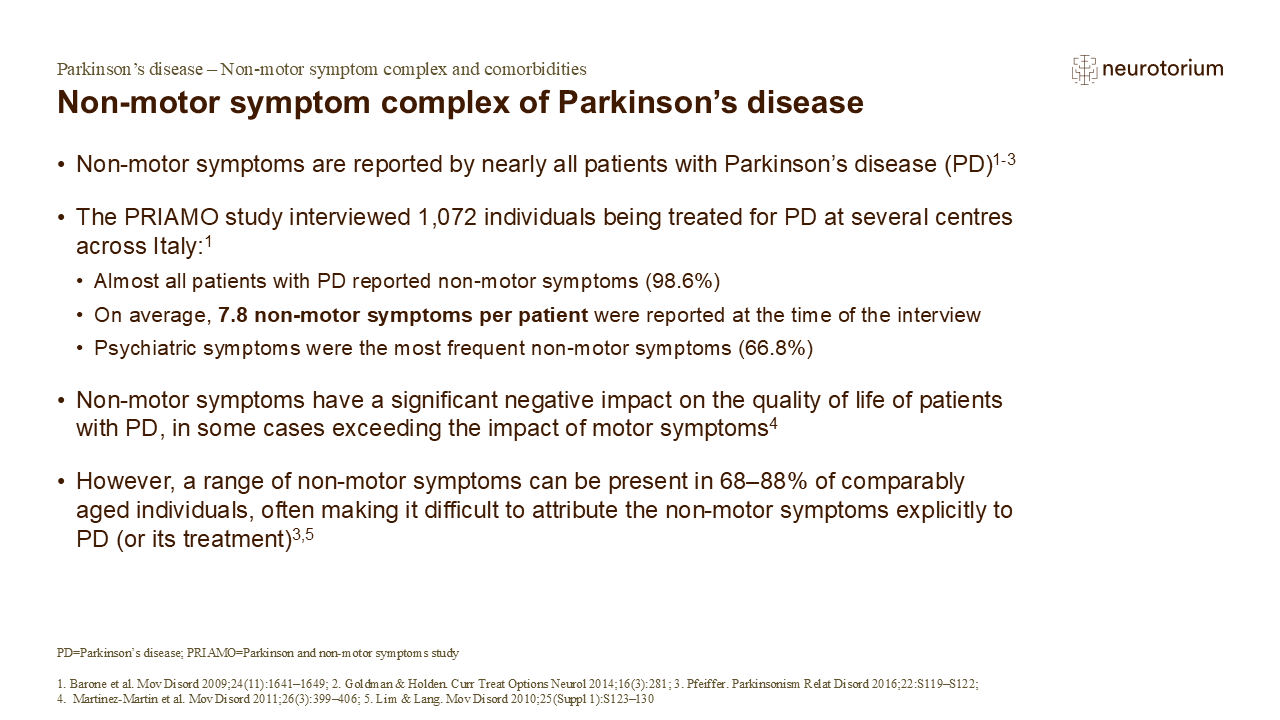
Nearly all patients with Parkinson’s disease (PD) experience non-motor symptoms at some stage of the disease.2 Psychiatric symptoms are the most frequent non-motor symptoms, reported by approximately two-thirds of patients with PD.2 These symptoms may include dementia, psychosis, depression, anxiety, apathy, impulse control disorders, and fatigue.2
Psychosis and dementia are often found together in PD, and both contribute to reduced quality of life, increase the risk of morbidity and mortality, and reduce the ability of patients to perform everyday tasks and live independently.2
PD is associated with numerous non-motor symptoms – caused by damage to the autonomic nervous system – leading to impaired control of internal organs, such as the bladder, gastrointestinal tract, and the cardiovascular system.3
It can be difficult to know whether or not non-motor symptoms are directly attributable to PD-related neurodegeneration, since many of the symptoms are found in people of a similar age without the disease.3 Some authors, therefore, refer to non-motor symptoms as PD-associated ‘comorbidities’ – i.e., health problems that occur at the same time as PD – rather than ‘symptoms’.3