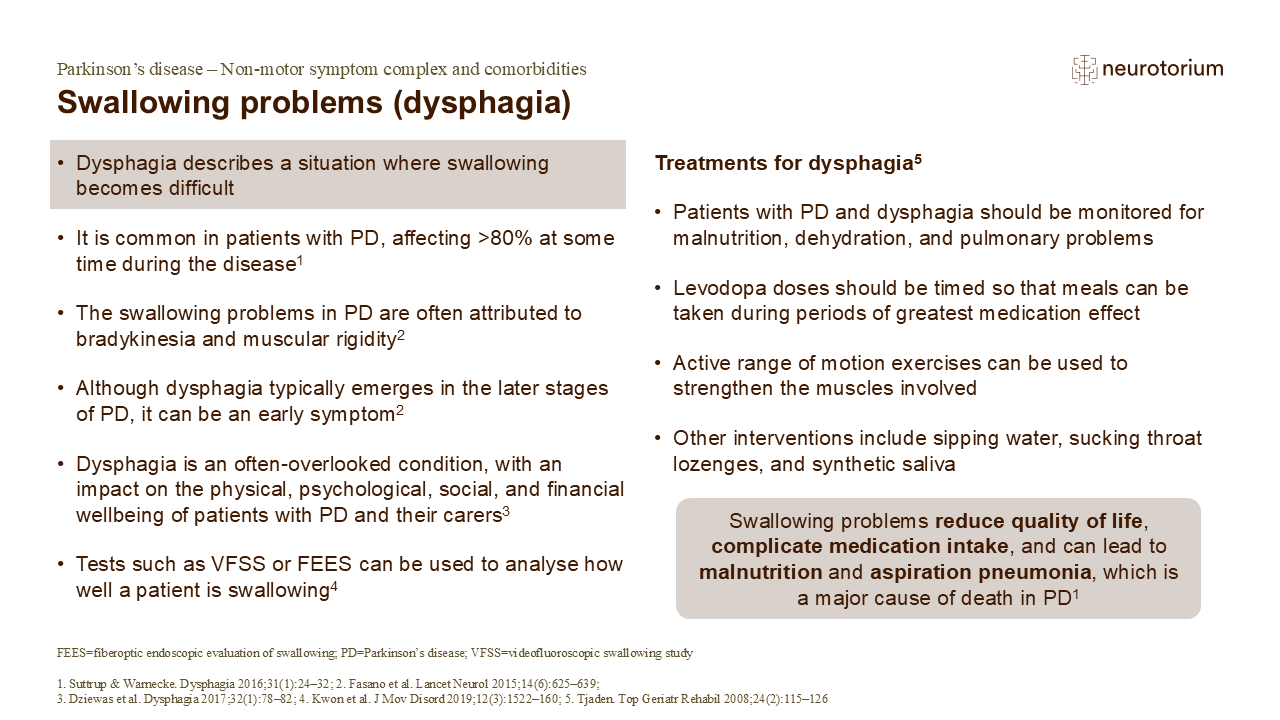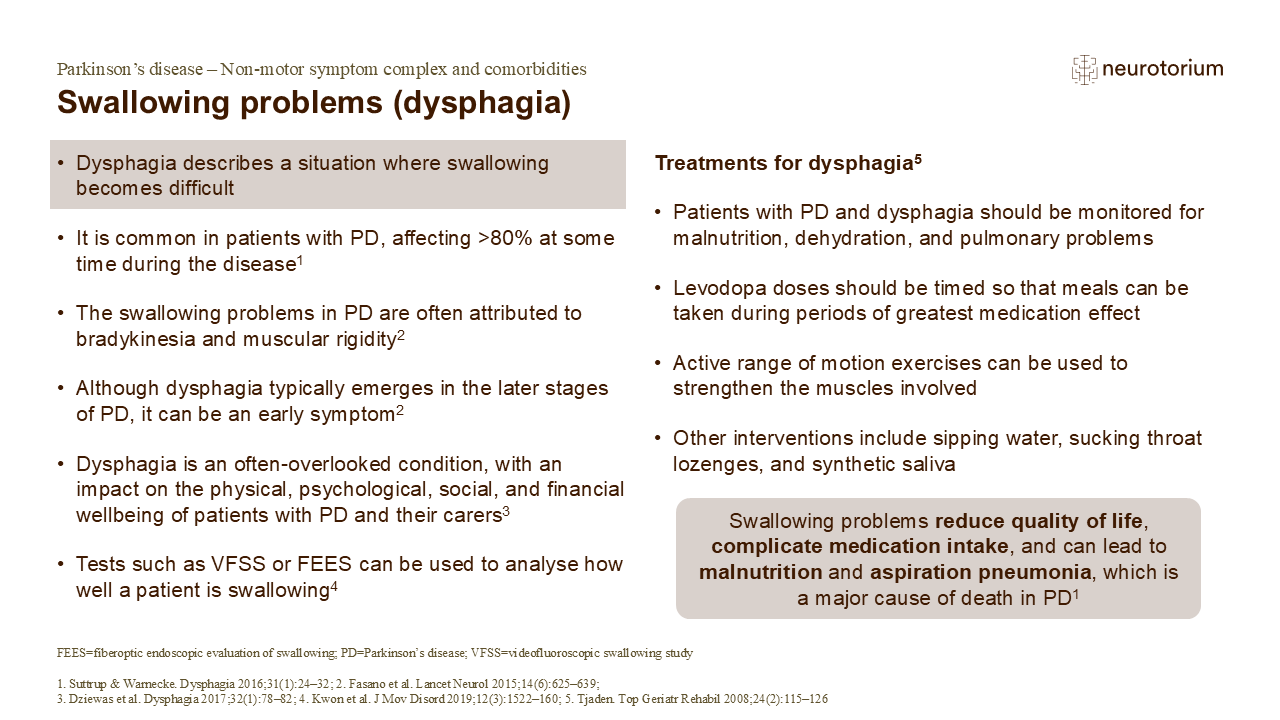
Problems with the swallowing of foods, liquids or saliva (dysphagia) may occur at any stage of PD and affect 40–95% of patients.5 This can have serious consequences, particularly if foods or liquids are taken into the respiratory tract (aspiration) where they can cause infections, such as pneumonia.2 Dysphagia also increases the risk of dehydration and malnutrition.5 Dysphagia in PD is complex and highly variable in nature and severity,5 making clinical assessment challenging and sometimes unreliable.1
References:
1. Suttrup I, Warnecke T. Dysphagia in Parkinson’s disease. Dysphagia 2016; 31 (1): 24–32.
5. Tjaden K. Speech and swallowing in Parkinson’s disease. Top Geriatr Rehabil 2008; 24 (2): 115–126.