

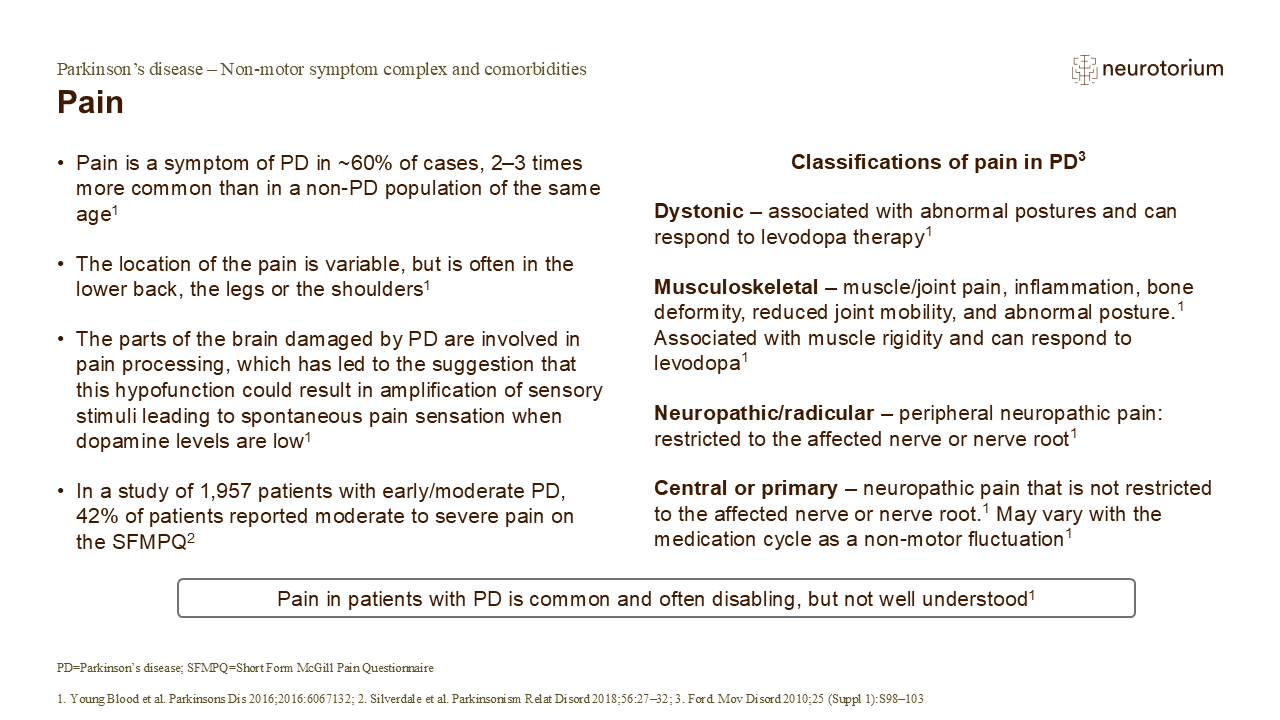
Pain is defined as an unpleasant or distressing sensory experience.4 It occurs in a large proportion of cases of PD, but in individual patients it is often difficult to determine whether the pain is due to the PD itself.1-4
The most common form of pain in PD is musculoskeletal, which typically occurs as a result of muscle rigidity and hypokinesia (e.g., frozen shoulder).4-6 This kind of pain usually occurs on the side on which motor symptoms first appeared or are more severe.1 It can be associated with the presence and severity of motor symptoms, meaning the pain may be reduced when dopaminergic therapy is optimised.1 Musculoskeletal pain is most common in the lower back and legs, although shoulder pain is also quite common during the early stages of the disease.1
Dystonic pain is a result of abnormal postures brought on by ‘OFF’ periods.1 It is characterised by sustained or intermittent muscle contractions that result in abnormal, frequently repetitive movements and/or postures.1 These contractions cause intense pain, often in the feet.4
Pain often presents with other non-motor symptoms, including depression, and the two can be mutually reinforcing – successful treatment of depression may therefore improve the perception and processing of pain in the mind of the patient.1
3. Ford B. Pain in Parkinson’s disease. Mov Disord 2010; 25 (Suppl 1): S98–103.