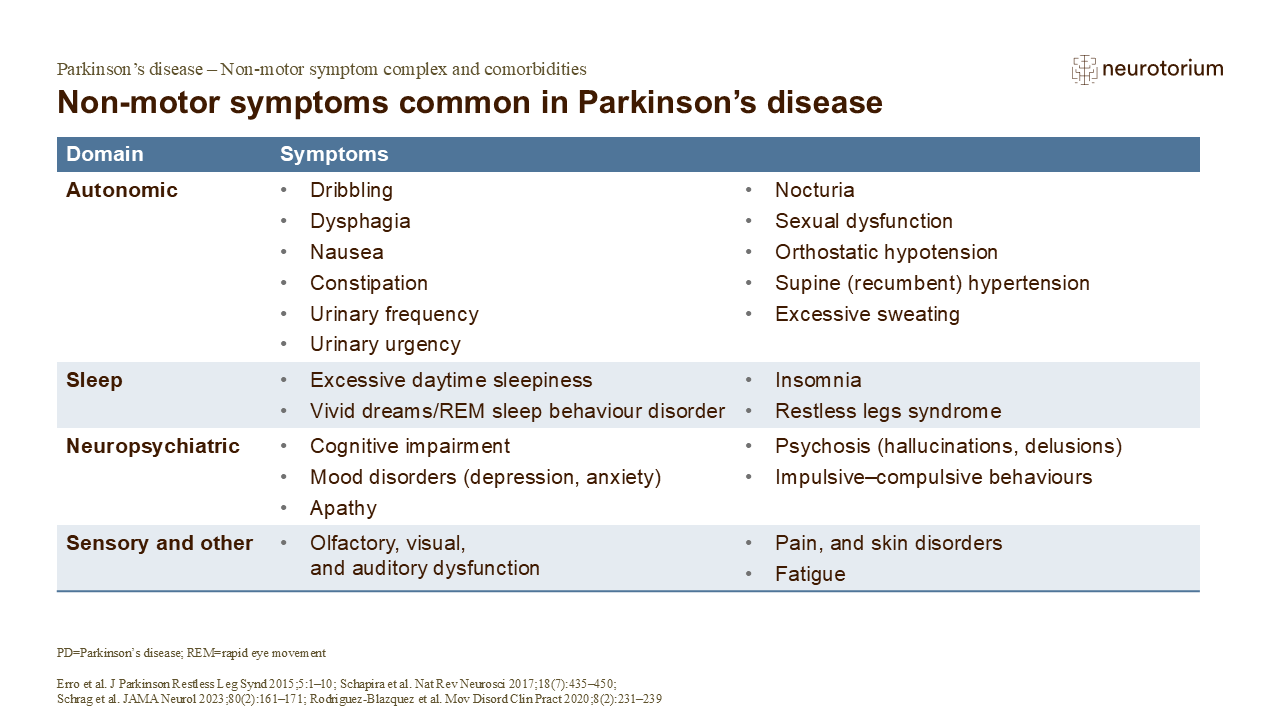
The non-motor symptoms of PD can be grouped into four domains: autonomic (including gastrointestinal, genitourinary, and cardiovascular symptoms), sleep disorders; neuropsychiatric disorders; and sensory and other symptoms (including pain and fatigue).1-4 Many of these symptoms are treatable, mostly with drug therapy, but sometimes with non-pharmacological approaches.1,2 Routine screening of patients with validated questionnaires may help to identify and treat symptoms effectively, as they arise.5,6
References:
1. Erro R, Santangelo G, Barone P, Vitale C. Nonmotor symptoms of Parkinson’s disease: classification and management. J Parkinson Restless Leg Synd 2015; 5: 1–10.
2. Schapira AHV, Chaudhuri KR, Jenner P. Non-motor features of Parkinson disease. Nat Rev Neurosci 2017; 18 (7): 435–450.
3. Schrag A, Bohlken J, Dammertz L, et al. Widening the spectrum of risk factors, comorbidities, and prodromal features of Parkinson disease. JAMA Neurol 2023; 80 (2): 161–171.
4. Rodriguez-Blazquez C, Schrag A, Rizos A, et al. Prevalence of non-motor symptoms and non-motor fluctuations in Parkinson’s disease using the MDS-NMS. Mov Disord Clin Pract 2020; 8 (2): 231–239.
5. Chaudhuri KR, Sauerbier A, Rojo JM, et al. The burden of non-motor symptoms in Parkinson’s disease using a self-completed non-motor questionnaire: a simple grading system. Parkinsonism Relat Disord 2015; 21 (3): 287–291.
6. Parkinson’s UK website. Non-motor symptoms questionnaire (‘NMSQuest’). https://www.parkinsons.org.uk/sites/default/files/publications/download/english/nms_questionnaire.pdf. Accessed February 2025.