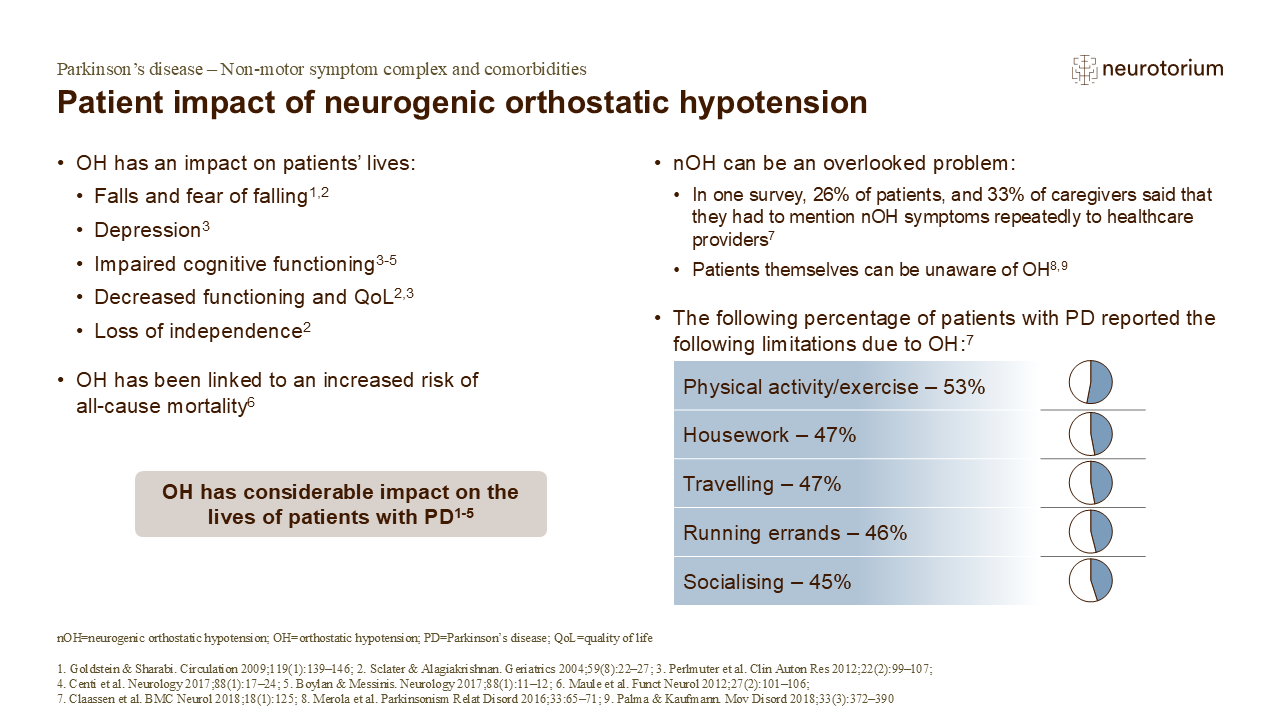
One study investigated the patient impact of neurogenic orthostatic hypotension (nOH) by surveying 363 patients, 90% of whom had PD, and 128 of their caregivers.7 The survey included questions about the sorts of symptoms experienced, the timing of the symptoms, the impact of the symptoms, and the limitations that symptoms placed on the patient.7 The results showed the impact that nOH has on patients’ functioning and quality of life, including impaired mobility (such as difficulty with positional changes), increased frequency of falls, and decreased ability to maintain activities of daily life.7
References:
1. Goldstein DS, Sharabi Y. Neurogenic orthostatic hypotension: a pathophysiological approach. Circulation 2009; 119 (1): 139–146.
2. Sclater A, Alagiakrishnan K. Orthostatic hypotension: a primary care primer for assessment and treatment. Geriatrics 2004; 59 (8): 22–27.
3. Perlmuter LC, Sarda G, Casavant V, et al. A review of orthostatic blood pressure regulation and its association with mood and cognition. Clin Auton Res 2012; 22 (2): 99–107.
4. Centi J, Freeman R, Gibbons CH, et al. Effects of orthostatic hypotension on cognition in Parkinson disease. Neurology 2017; 88 (1): 17–24.
5. Boylan LS, Messinis L. Orthostatic hypotension, cognition, and Parkinson disease: dumbing down by standing up. Neurology 2017; 88 (1): 11–12.
6. Maule S, Milazzo V, Maule MM, et al. Mortality and prognosis in patients with neurogenic orthostatic hypotension. Funct Neurol 2012; 27 (2): 101–106.
7. Claassen DO, Adler CH, Hewitt LA, Gibbons C. Characterization of the symptoms of neurogenic orthostatic hypotension and their impact from a survey of patients and caregivers. BMC Neurol 2018; 18 (1): 125.
8. Merola A, Romagnolo A, Rosso M, et al. Orthostatic hypotension in Parkinson’s disease: does it matter if asymptomatic? Parkinsonism Relat Disord 2016; 33: 65–71.
9. Palma JA, Kaufmann H. Treatment of autonomic dysfunction in Parkinson disease and other synucleinopathies. Mov Disord 2018; 33 (3): 372–390.