

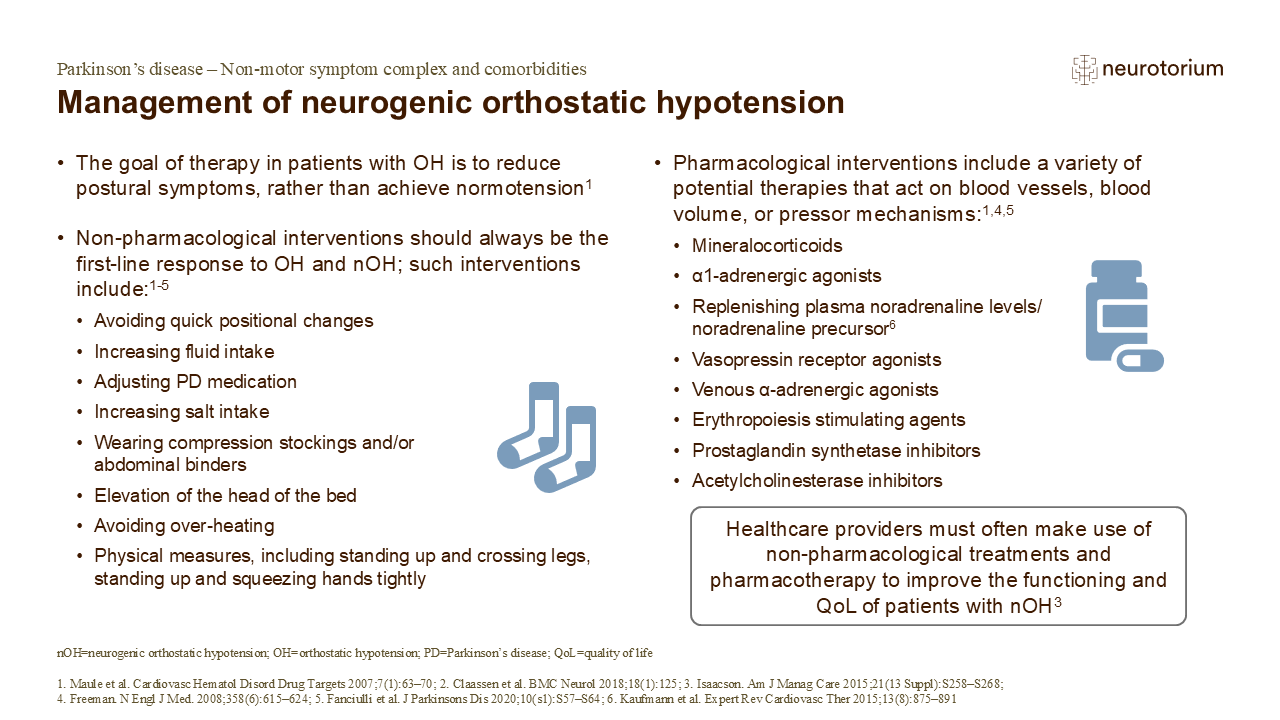
In treating patients with neurogenic orthostatic hypotension (nOH), the goal is to lessen the symptom burden, rather than attempting to achieve normal blood pressure on standing.1,7 The stepwise management of nOH involves:7
- Removing aggravating factors – hypotensive drugs should be discontinued or the dose reduced, and anaemia should be investigated (anaemia can potentially worsen OH, by reducing the oxygen carrying potential of the blood).
- Non-pharmacological treatments – there are many changes that can be encouraged before pharmacological treatments are considered. Patients should understand the effect of posture on blood pressure, and should learn the various physical countermeasures that can raise blood pressure.
- Pharmacological treatments – if required, the pharmacological approach to treating nOH involves one or both of two strategies: expanding the intravascular volume, and increasing peripheral vascular resistance. The selection of either, or both, approaches depends on the individual needs and clinical background of the patient.
4. Freeman R. Neurogenic orthostatic hypotension. N Engl J Med 2008; 358 (6): 615–624.