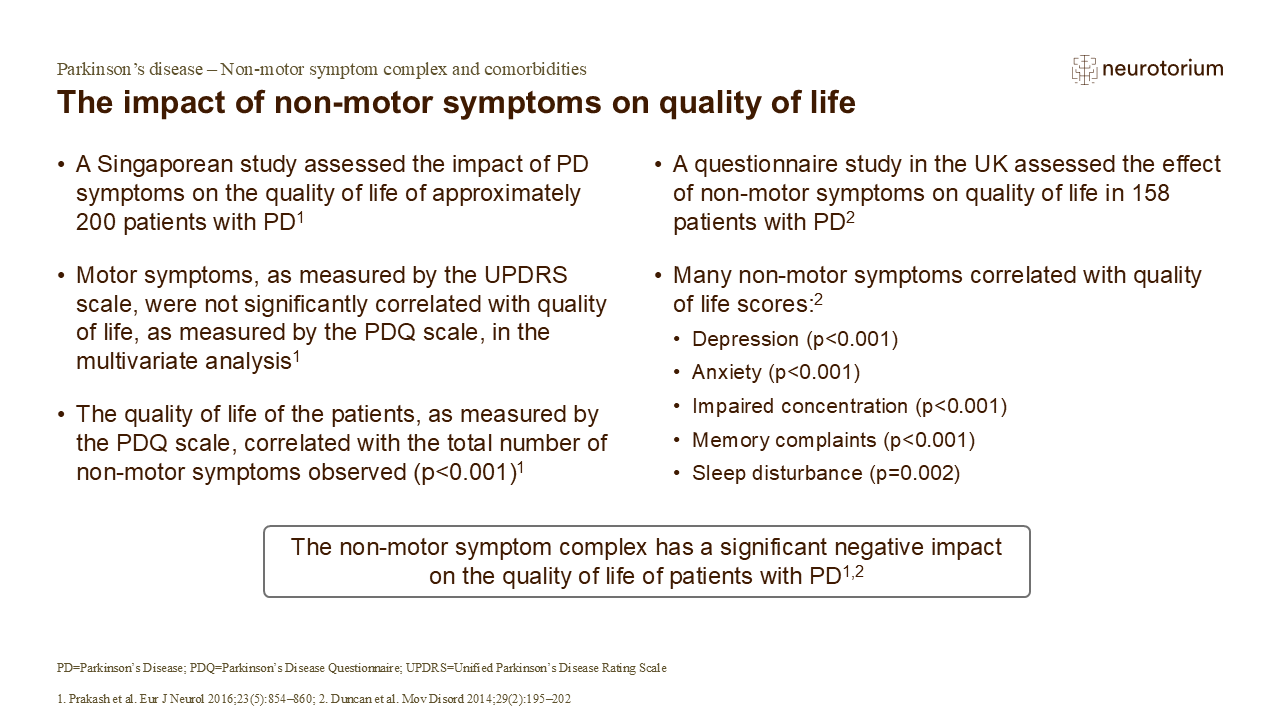
One of the main principles of caring for patients with PD is to preserve quality of life as much as possible, particularly during the later stages of the disease.1 Historically, the focus of clinical care has been on the detection and control of motor symptoms, but there is now a greater recognition that non-motor symptoms also need to be identified and treated.1
Not all non-motor symptoms have an equal impact of quality of life, however.1 Studies suggest that sleep disorders – and the fatigue they can lead to – are common and have a significant negative impact on quality of life.1 Mood disorders and cognitive decline are also particularly important determinants of quality of life in people living with PD, both patients and caregivers.3-5
References:
1. Prakash KM, Nadkarni NV, Lye WK, et al. The impact of non-motor symptoms on the quality of life of Parkinson’s disease patients: a longitudinal study. Eur J Neurol 2016; 23 (5): 854–860.
2. Duncan GW, Khoo TK, Yarnall AJ, et al. Health-related quality of life in early Parkinson’s disease: the impact of nonmotor symptoms. Mov Disord 2014; 29 (2): 195–202.
3. Connolly B, Fox SH. Treatment of cognitive, psychiatric, and affective disorders associated with Parkinson’s disease. Neurotherapeutics 2014; 11 (1): 78–91.
4. Jones AJ, Kuijer RG, Livingston L, et al. Caregiver burden is increased in Parkinson’s disease with mild cognitive impairment (PD-MCI). Transl Neurodegener 2017; 6: 17.
5. Lim SY, Tan AH, Fox SH, et al. Integrating patient concerns into Parkinson’s disease management. Curr Neurol Neurosci Rep 2017; 17 (1): 3.