

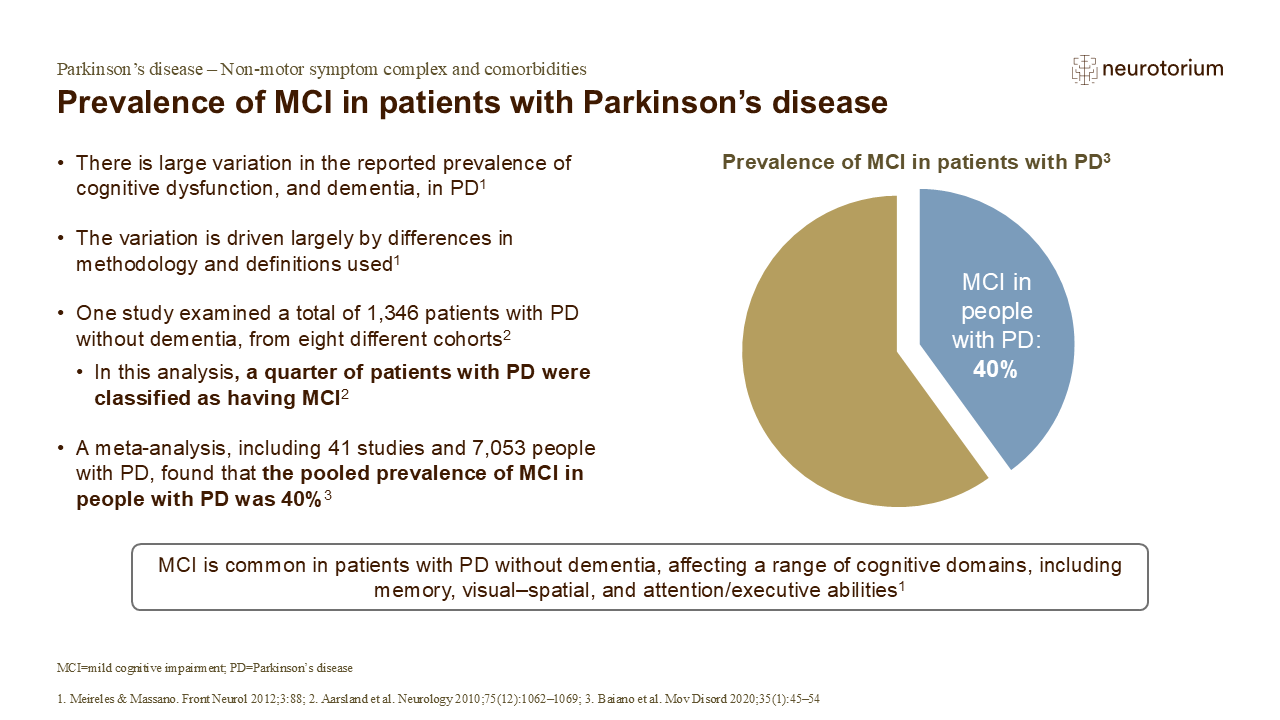
One of the problems that researchers have when studying impaired cognition in PD is the wide variation in criteria used to define MCI, which can make comparisons between studies challenging.1,2 A meta-analysis of studies investigating the prevalence and clinical aspects of MCI and PD found 41 studies, from which a pooled prevalence of 40% was calculated.3 The presence of MCI in people with PD was associated with many factors, including older age, lower education, severity of motor symptoms, and the presence of apathy and depression.3
Another study harmonized data from various cohorts by applying the MDS diagnostic criteria.2 In doing so, it was possible to pool data from eight cohorts into a group large enough to explore MCI in subgroups based on age, sex, and duration and stage of PD.2 MCI was associated with increasing age at the time of assessment and at disease onset, increasing duration of disease, severity of motor symptoms and disease stage, presence of depression, and lower proportion of dopamine agonist use.2 Among the three cognitive domains (memory, attention/executive, visuospatial), memory impairment was the most common deficit (13.3%), followed by visuospatial impairment (11.0%) and then attention/executive function impairment (10.1%).2 Impairment in only one of the three domains occurred in 19.5% of patients, while 5.4% had impairment in two domains, and 0.9% had impairment in all three domains.2