A randomized-pairs trial including 156 patients with advanced PD and severe motor symptoms was used to compare DBS of the subthalamic nucleus combined with medication versus medication alone to evaluate the changes in the quality of life at 6 months compared with baseline, as assessed by the Parkinson’s disease Questionnaire (PDQ-39).7 Using diaries that separated the days into half-hour segments, patients recorded their mobility, including the presence of troublesome dyskinesias, during the three days before admission and for another three days, six months after admission.7 The primary DBS combined with medication was shown to result in greater improvements in mobility, activities of daily living, emotional well-being, stigma of the disease and bodily discomfort among patients with advanced PD and severe motor symptoms than medication alone.7 The PD SURG trial was designed to assess the impact of DBS on patient quality of life.8 A total of 366 patients with advanced PD were randomised to either undergo DBS with medical therapy, or receive non-surgical therapy only.8 There were clear advantages for surgery compared with medical therapy alone after one year, both in terms of patient-assessed quality of life, and clinical assessment of symptoms.8 These benefits were likely to be meaningful to patients, although DBS would only be expected to affect some symptoms, such as mobility and activities of daily living, but not others (e.g., social support, cognition, and communication).8 The results of the PD SURG trial also showed substantial benefits of DBS in the time and severity of dyskinesia, and ‘OFF’ periods.8 Technological developments enabling new neurostimulation approaches, coupled with research into strategies for improving DBS outcomes, render DBS a useful clinical tool for bettering the lives of people with PD, improving functioning and quality of life in people experiencing motor complications.3
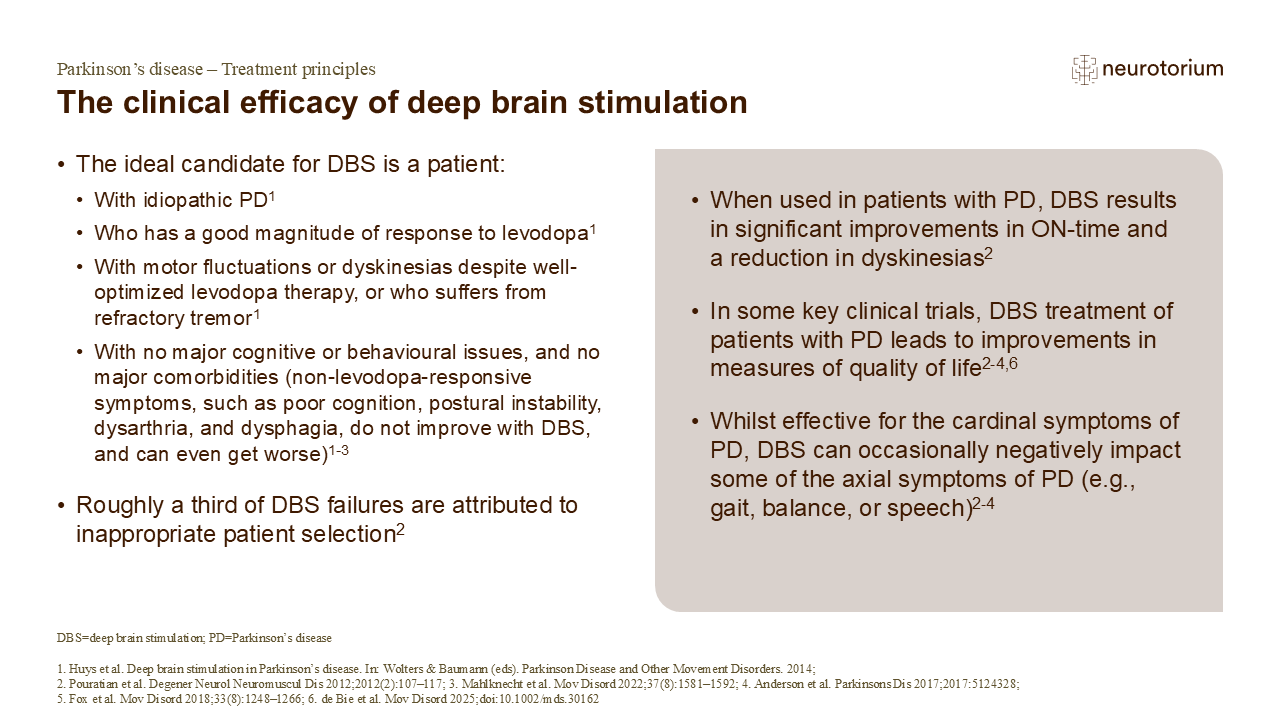
The clinical efficacy of deep brain stimulation