

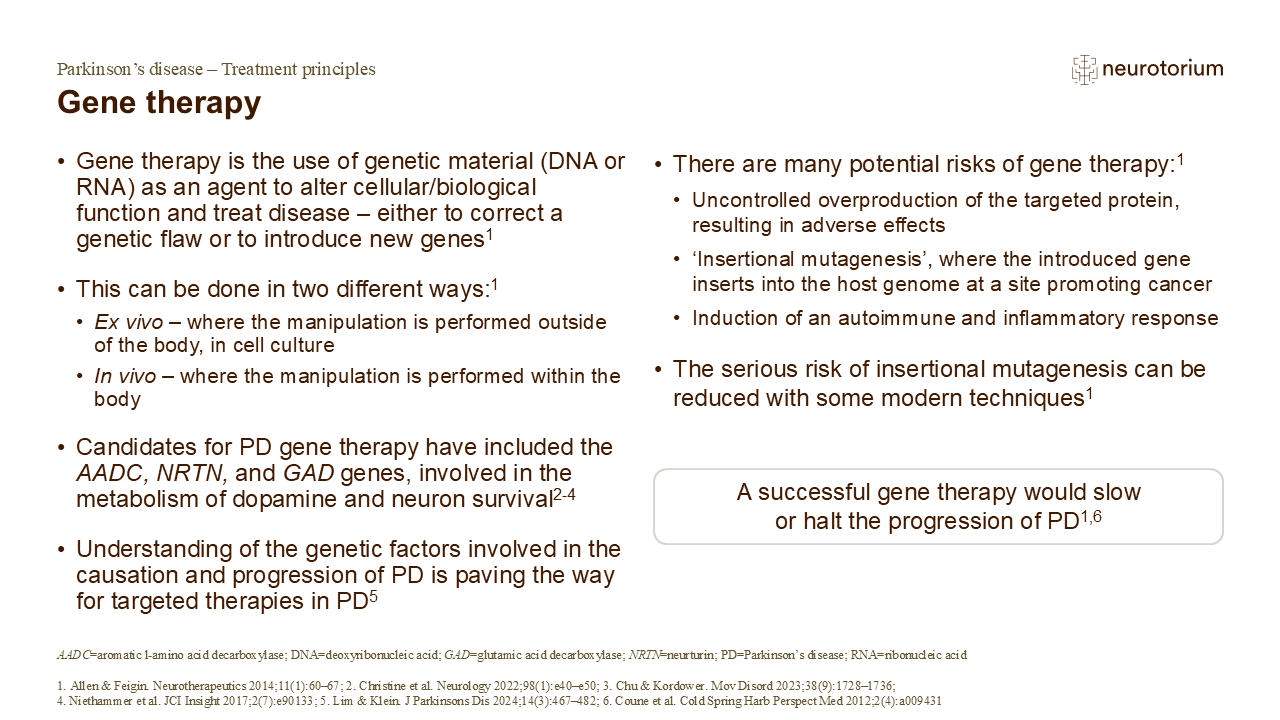
Over the last 10 years, there have been major advances in gene therapy approaches for the treatment of PD, several of which have entered human clinical trials.1,6 These trials have produced some promising results, albeit not consistently.1
Evidence accumulated thus far indicates that gene therapy that targets multiple brain regions – including the striatum, the subthalamic nucleus, and the substantia nigra – can be both safe and well-tolerated in patients with PD.1
Several key challenges remain for developing a safe and effective gene therapy.1 These include, how best to control gene expression, how to determine the optimal target, the optimal dose, and the ideal patient population for future gene therapy trials.1
References:
1. Allen PJ, Feigin A. Gene-based therapies in Parkinson’s disease. Neurotherapeutics 2014; 11 (1): 60–67.