

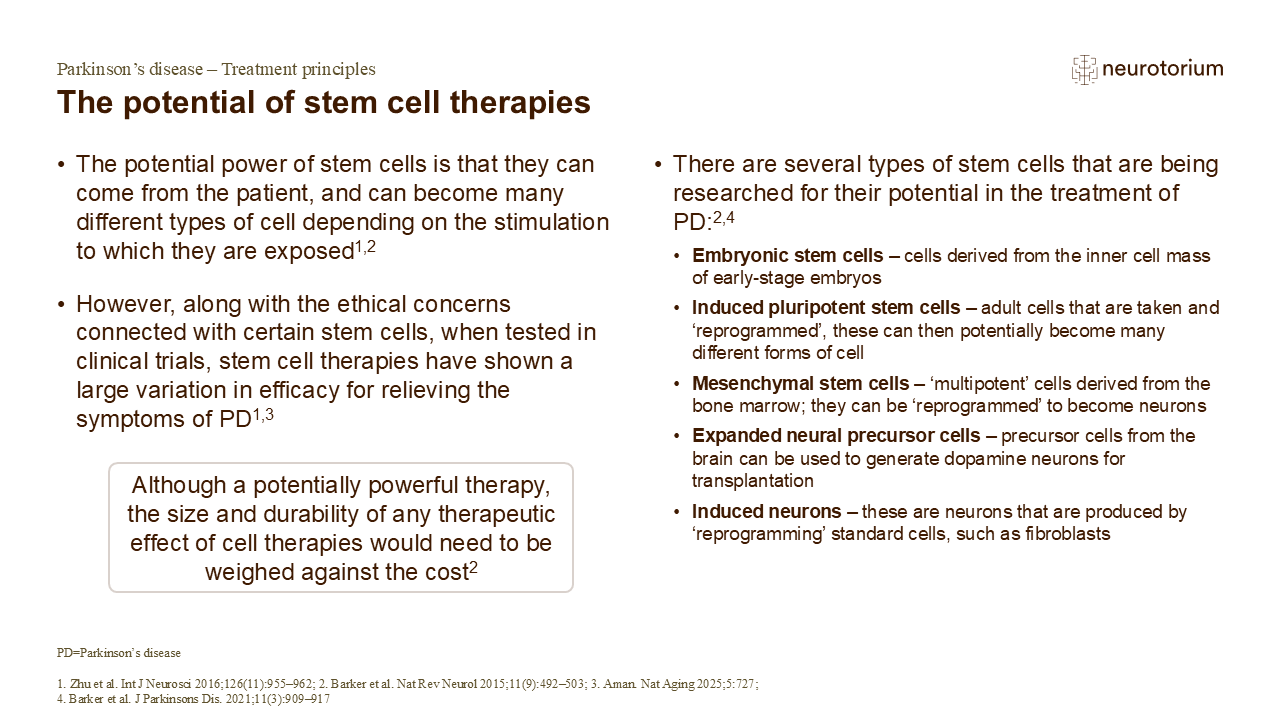
A great deal of research effort is now being invested in stem cell transplantation therapies, to restore neurological function.5 In related fields, such as spinal cord injury research, important progress has been made using stem cells to treat patients with neurological injuries.5
However, serious ethical and methodological issues remain, such as whether or not to use embryonic stem cells; how to prevent Lewy pathology from developing in transplanted cells; how best to deliver the cell-based therapies; and how to prevent a reaction against the transplanted cells by the patient’s immune system.1,2,4,5 Recently, it has become possible to work with ‘induced pluripotent stem cells’ (iPSCs), which can subsequently become neurons.5 Whilst more research is needed to test this method for treating Parkinson’s disease, an initial case-study has shown promising results for the iPSC approach.6
References:
1. Zhu B, Caldwell M, Song B. Development of stem cell-based therapies for Parkinson’s disease. Int J Neurosci 2016; 126 (11): 955–962.
3. Aman Y. Stem cell therapies for Parkinson’s disease. Nat Aging 2025; 5: 727.