

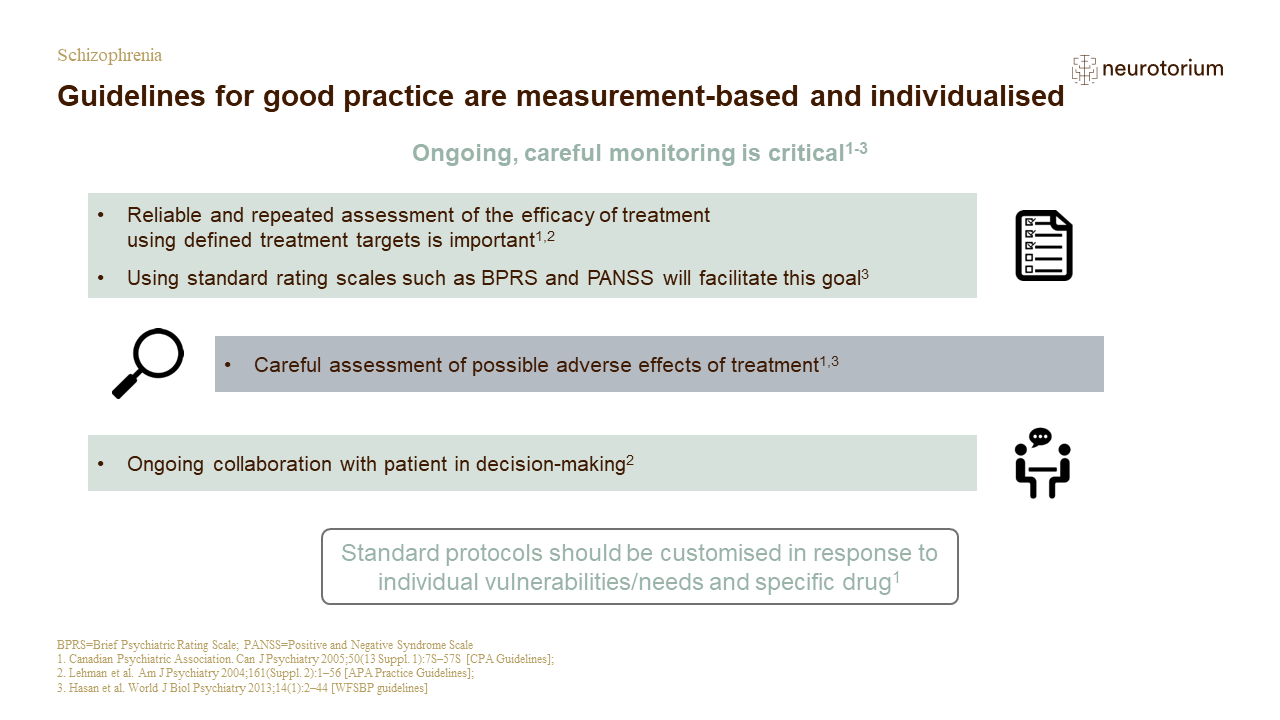
Key message: Guidelines for the treatment of schizophrenia recommend regular monitoring for adverse events and efficacy of treatment.
Background
- Symptoms (mental and physical), signs, activities of daily living (ADL), level of functioning, and adverse events are key areas to assess at all phases of the illness.[CPA, 2005]
- Collateral information (e.g., from family members, caregivers and healthcare professionals) is usually essential for a more complete understanding of symptoms, signs and functioning.[CPA, 2005]
- Longitudinal follow-up by the same clinician(s) to monitor improvements or worsening is optimal.[CPA, 2005]
- The patient’s competency to accept or refuse treatment must be periodically assessed and recorded.[CPA, 2005]
- Regular and ongoing evaluations are equally necessary when patients respond to medications, when they fail to respond, and when they develop adverse events. Standardised scales are useful tools for baseline and later assessments.[CPA, 2005]
- Patients will often not spontaneously bring complaints and information to clinicians, and therefore, active, specific questioning, and informed examination and investigation are usually necessary.[CPA, 2005]
- Medications must be individualised because the individual response is highly variable.[CPA, 2005]
- Patients must be involved in decisions and choices for pharmacotherapy.[CPA, 2005]
Reference:
Canadian Psychiatric Association. Clinical practice guidelines. Treatment of schizophrenia. Can J Psychiatry 2005; 50 (13 Suppl. 1): 7S–57S.
Other references used on slide:
Lehman AF, Lieberman JA, Dixon LB, et al. Practice guideline for the treatment of patients with schizophrenia, second edition. Am J Psychiatry 2004; 161 (Suppl. 2): 1–56.
Hasan A, Falkai P, Wobrock T, et al.; WFSBP Task force on Treatment Guidelines for Schizophrenia. World Federation of Societies of Biological Psychiatry (WFSBP) guidelines for biological treatment of schizophrenia, part 1: update 2012 on the long-term treatment of schizophrenia and management of antipsychotic-induced side effects. World J Biol Psychiatry 2013; 14 (1): 2–44.