

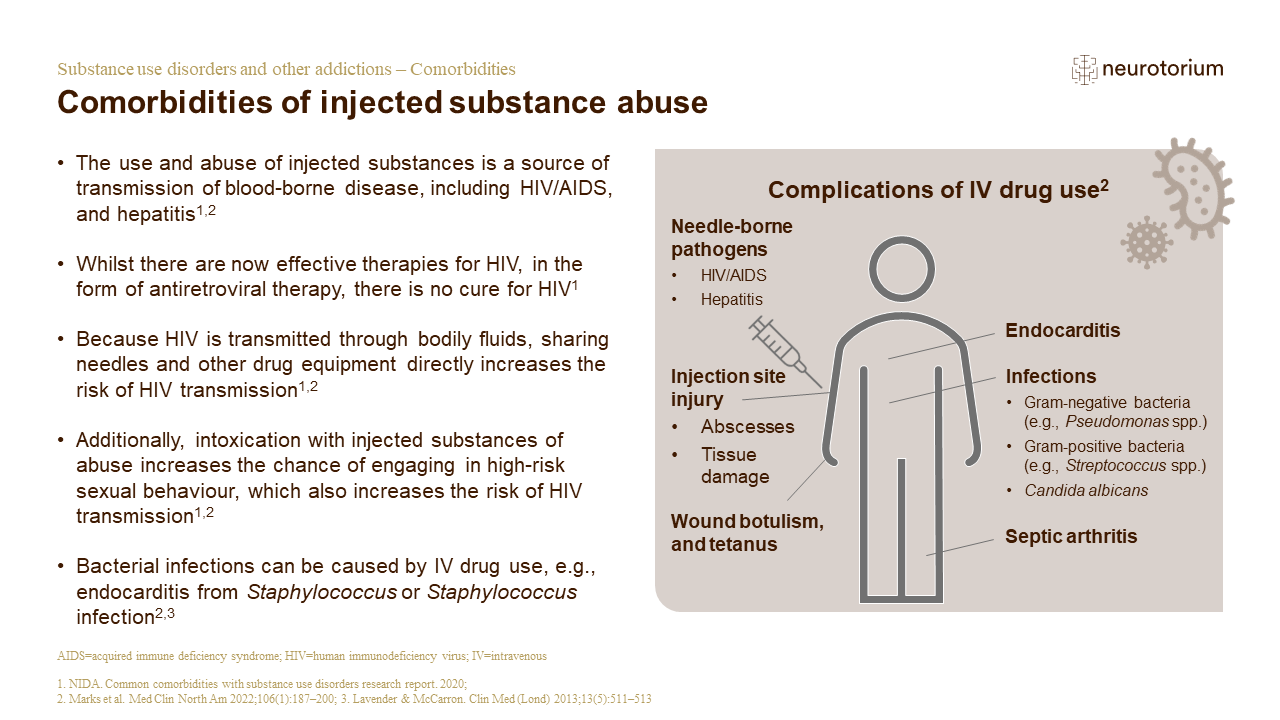
There are many possible infectious complications of intravenous (IV) drug use – some acute, and others longer term.[2,3] Such complications include:[3]
skin and soft tissue infections – these can range in severity from injection-site infections to life-threatening sepsis
pulmonary infections – IV-drug users are at high risk of community-acquired pneumonia (estimated to be 10-times greater risk than non-drug users)
infective endocarditis – inflammation of tissues within the heart
anthrax – cases of anthrax infection (a serious and life-threatening disease) have been reported from contaminated heroin
Clostridium – outbreaks of C. botulinum and C. novyi have been linked to contaminated heroin
AIDS, HIV, and hepatitis – these can be long-term serious complications of IV drug use.
People who use IV drugs can present an acute challenge to hospital staff.[3] Effective management requires a frank but non-judgemental approach to the patient, setting clear behavioural boundaries.[3]
References:
[1] National Institute on Drug Abuse. Common comorbidities with substance use disorders research report. Bethesda (MD): National Institutes on Drug Abuse (US); 2020. Available at: https://www.ncbi.nlm.nih.gov/books/NBK571451/.