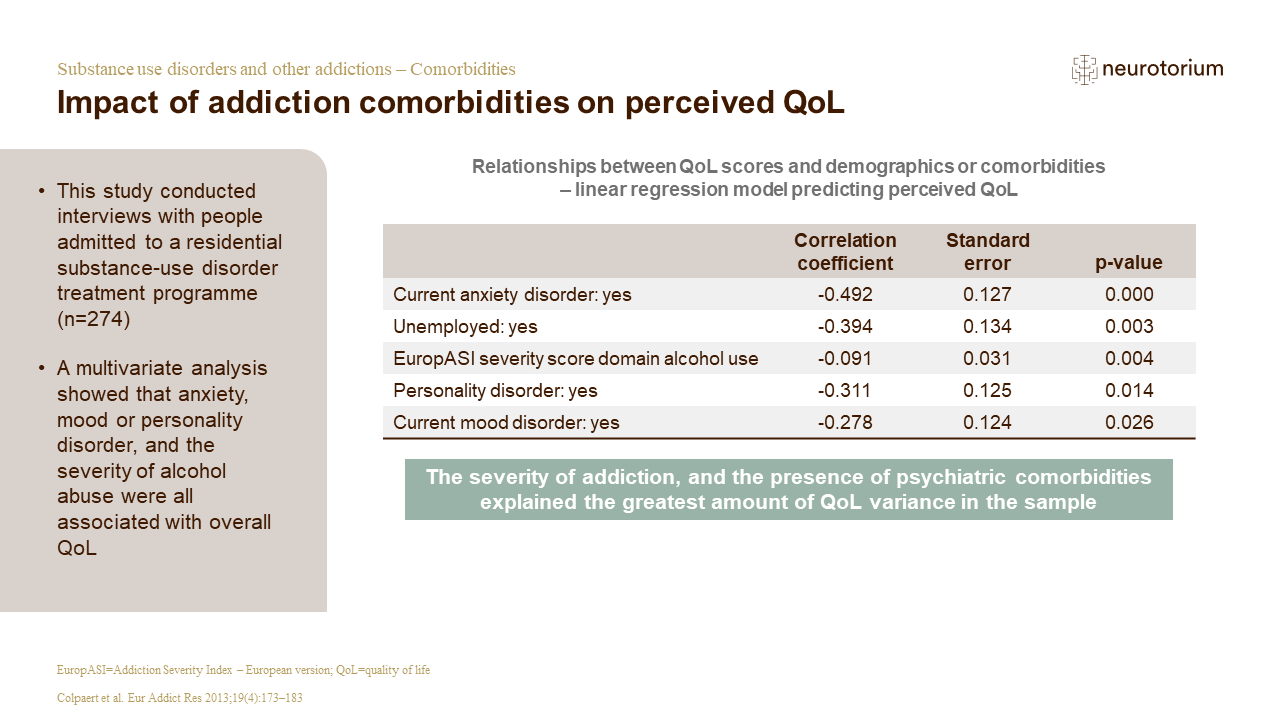
Several different measures and scales were used in this study of 274 individuals participating in 1 of 11 treatment programmes for their substance-use disorder(s) in Belgium.[1] These measures included a semi-structured interview (the European version of the Addiction Severity Index, EuropASI), a structured interview (the Mini-International Neuropsychiatric Interview, MINI) and two self-report questionnaires (the Assessment of DSM-IV Personality Disorders, ADP-IV, and the World Health Organization Quality of Life Instrument, WHOQoL-BREF).[1] Their analysis found that the severity of substance-use disorder, as well as psychiatric comorbidity, explained the greatest amount of QoL variance; interestingly, the type of substance abused did not greatly affect the results.[1]
Impact of addiction comorbidities on perceived QoL