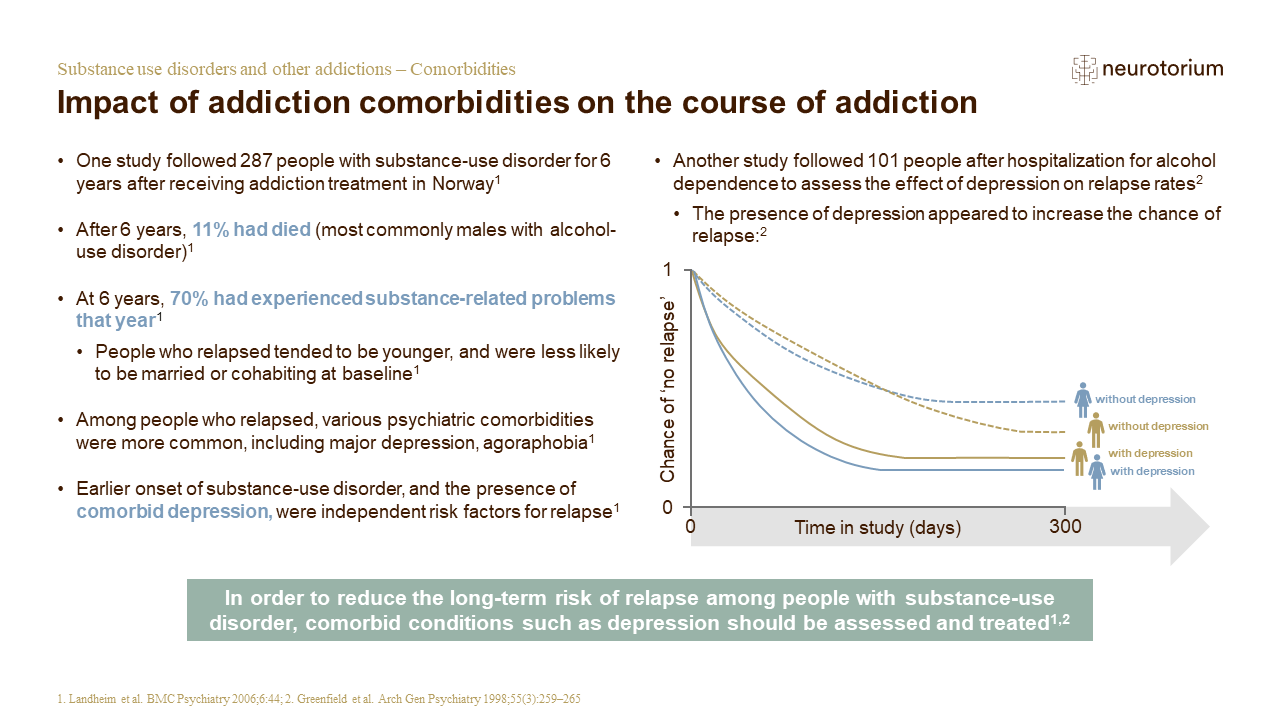
This study explored the effect of comorbidities in treatment-seeking people with substance-use disorders, and the relationship between comorbidity and relapse.[1] A sample of 287 people with substance-use disorders, who had received treatment, were followed-up six years after leaving treatment.[1] As outlined on the slide, the rates of relapse and mortality were high.[1] The authors concluded that, in order to reduce these long-term risks, individuals treated for substance-use disorders should also be assessed – and where necessary treated – for comorbidities such as depression and agoraphobia.[1]
Impact of addiction comorbidities on the course of addiction