

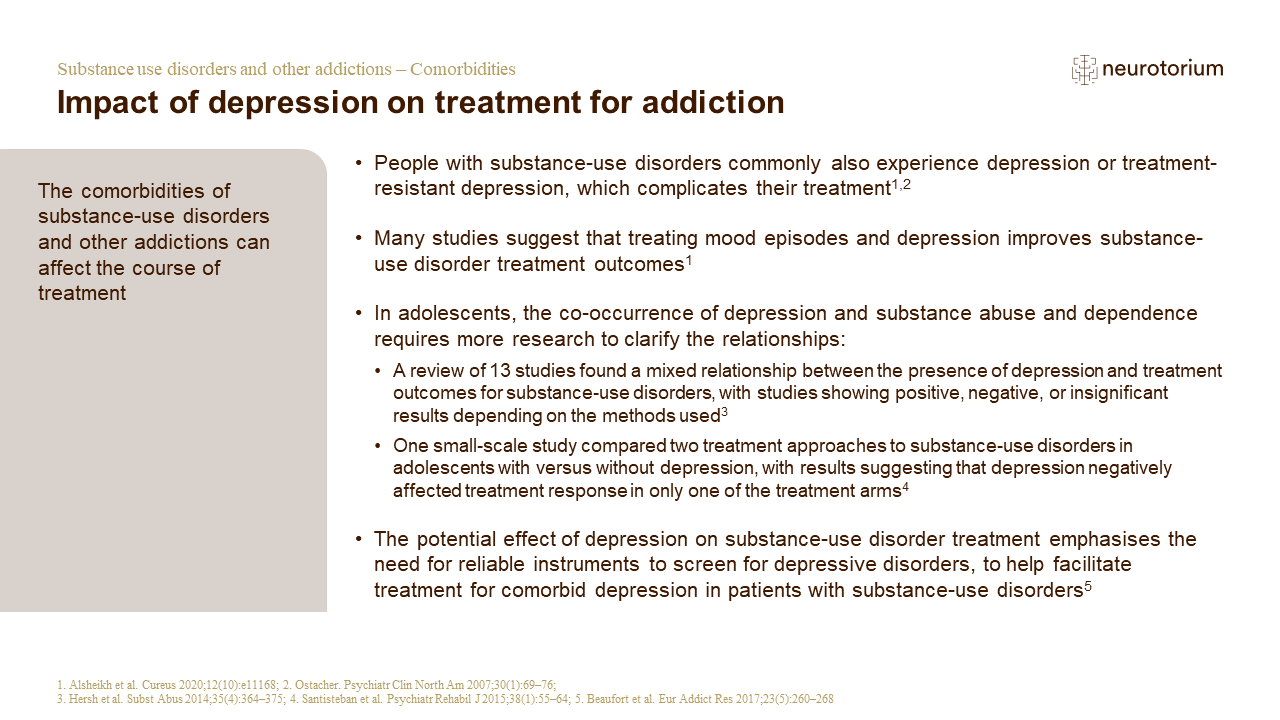
As outlined on the slide, depression, one of the comorbidities that often accompany substance-use disorders and addiction, can impact an individual’s treatment for that substance-use disorder.[1,2,3,4,5] One systematic review investigated the treatment of individuals with co-occurring depression and substance-use disorders.[1] After selecting eight studies, including a total of 132,373 individuals, the outcomes of treatment were analysed.[1] Depression, often treatment-resistant depression, was sometimes challenging to treat in people with substance-use disorders; effective treatment of this depression with pharmacotherapy or psychotherapy may help individuals in maintaining their abstinence from substance use.[1]
Furthermore, the presence of a comorbidity can cause complication for healthcare systems, because effective treatment requires communication and networking between the different health systems.[6] A holistic approach is required for an individual with substance-use disorder and comorbidities, to avoid the risk that one or other of these illnesses is not fully addressed.[6]
References: