

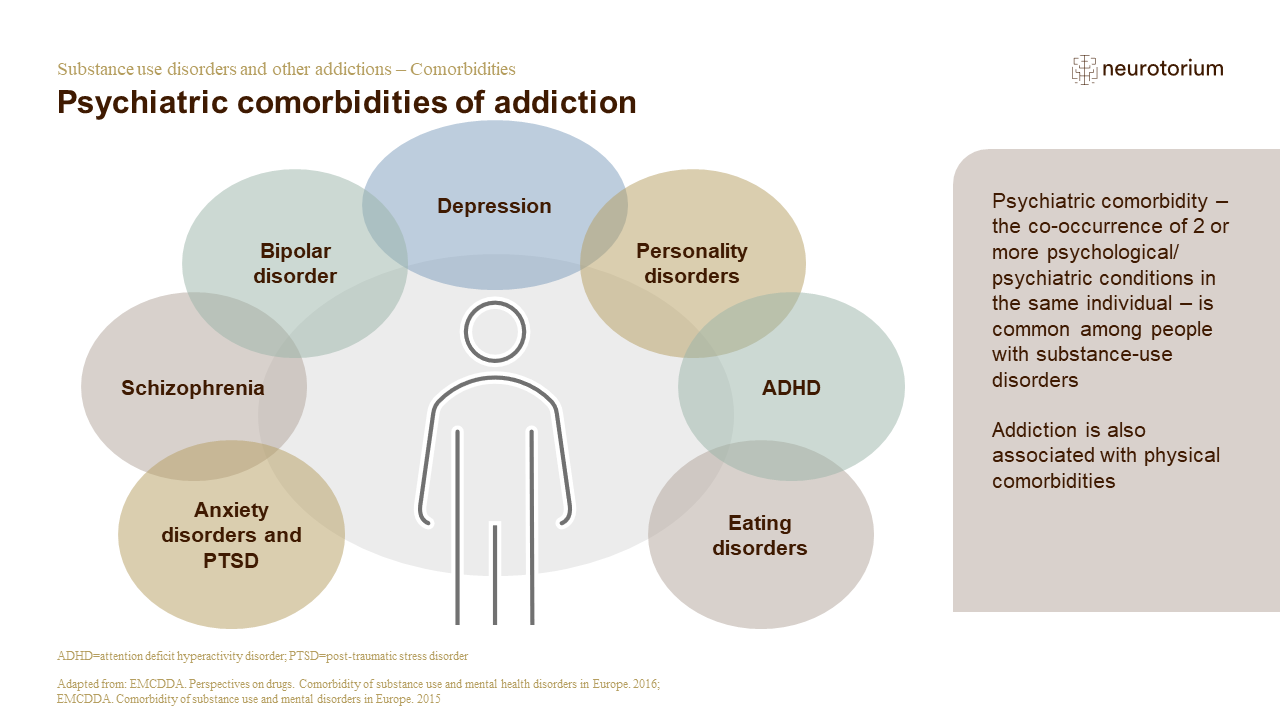
The phenomenon of comorbidity is common in psychiatry – defined as the presence of two or more psychological/psychiatric conditions in one individual.[1,2,3] Psychiatric comorbidity is common in addiction, with many different psychiatric conditions seen at greater frequency than in the general population, as outlined on the slide.[1,2] The presence of comorbidity complicates a diagnosis.[1] Clinically, the approach to treating a patient with a comorbidity should involve considering both diagnoses and forming a management approach for that individual that considers efficacy, and interactions and adverse effects of pharmacotherapy.[1]
References:
[1] EMCDDA. Comorbidity of substance use and mental disorders in Europe. 2015. Available at: https://www.emcdda.europa.eu/publications/insights/comorbidity-substance-use-mental-disorders-Europe.
[2] EMCDDA. Perspectives on drugs. Comorbidity of substance use and mental health disorders in Europe. 2016. Available at: https://www.emcdda.europa.eu/publications/insights/comorbidity-substance-use-mental-disorders-europe_en.