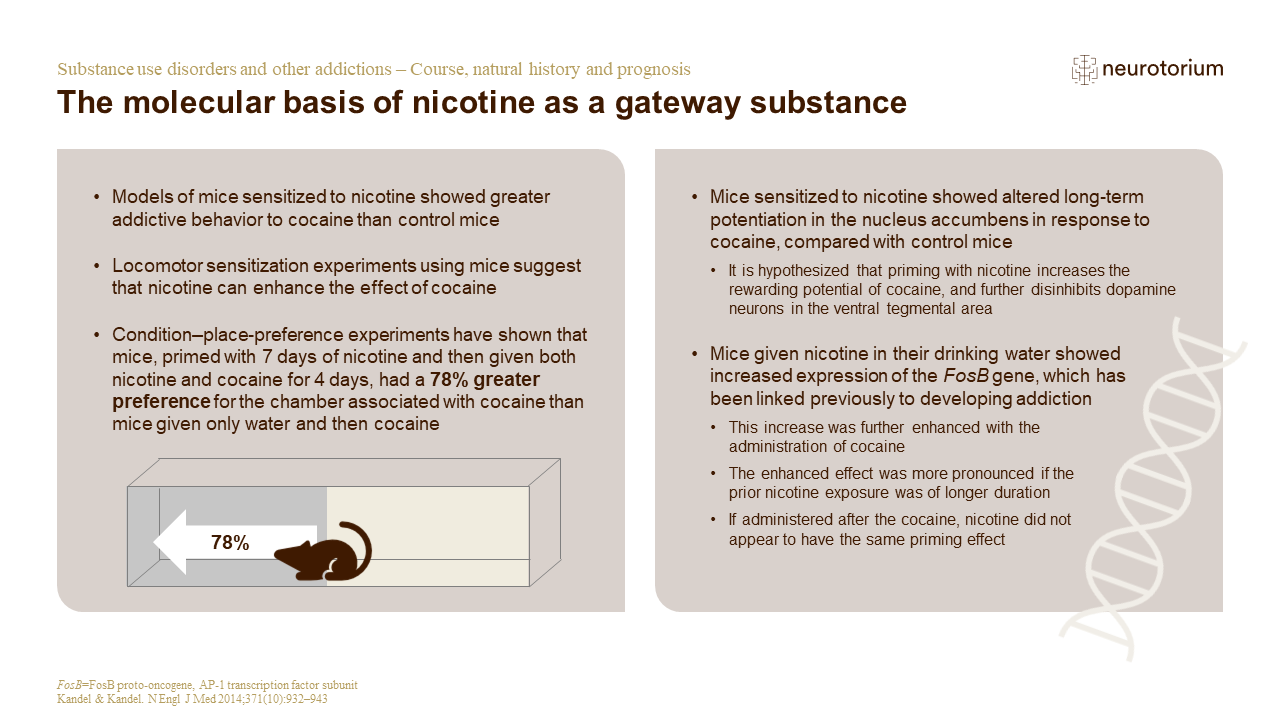
The slide summarises some of the pioneering work done into the possible molecular and genetic factors underlying the potential role of nicotine (and therefore cigarette smoking) as a agent that may lower the threshold for addiction to other agents.[1] Further research into the basis for changes in FosB expression led to a model in which nicotine-use inhibits histone deacetylase proteins, which increases histone acetylation and increases expression of FosB.[1]
The molecular basis of nicotine as a gateway substance