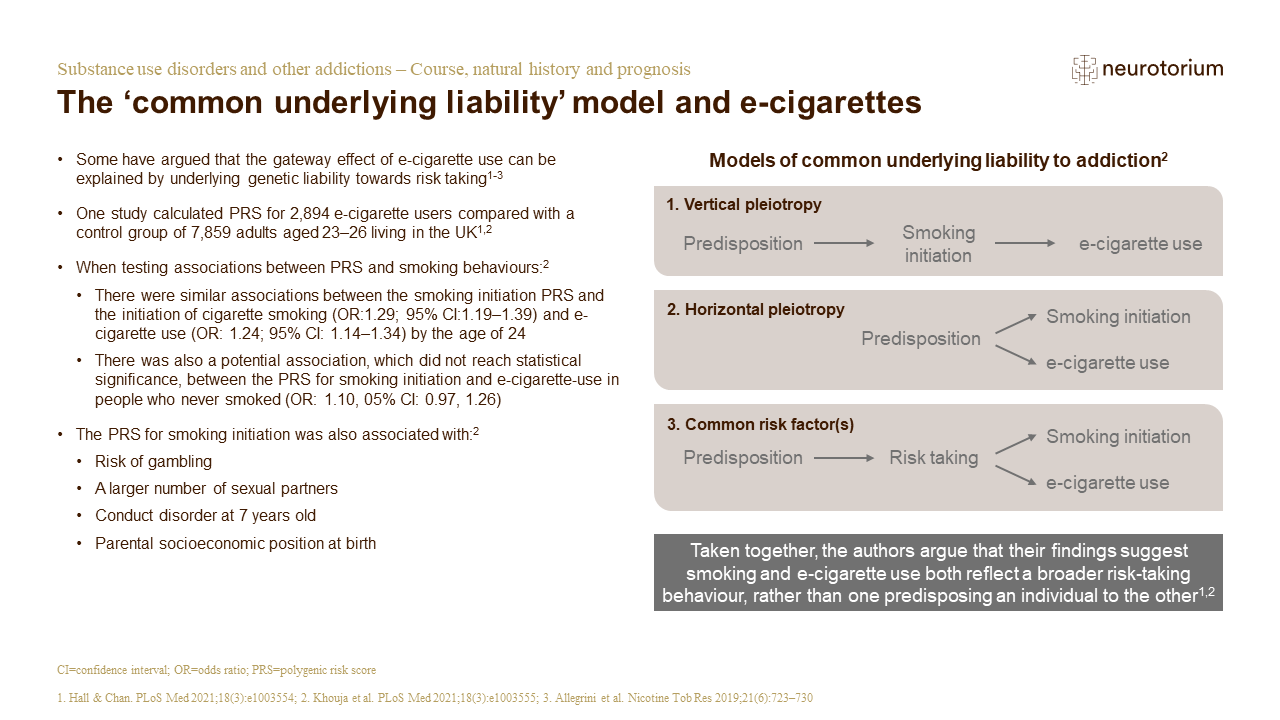
The study on the slide calculated polygenic risk scores (PRS) from a large UK dataset, and used logistic regression analysis to assess whether the association between self-reported smoking initiation and e-cigarette use could be explained by the PRS for smoking initiation.[2] The findings indicated that young people who are likely to experiment with cigarettes are also likely to experiment with e-cigarettes – implying a common underlying liability.[2] These PRS data is are line with earlier studies, including one study that used PRS for smoking and cannabis-use traits, and used these to predict e-cigarette- and pipe-use phenotypes.[1,3] This study found genetic vulnerability to smoking heaviness was associated with lifetime e-cigarette use.[3]
The ‘common underlying liability’ model and e-cigarettes