

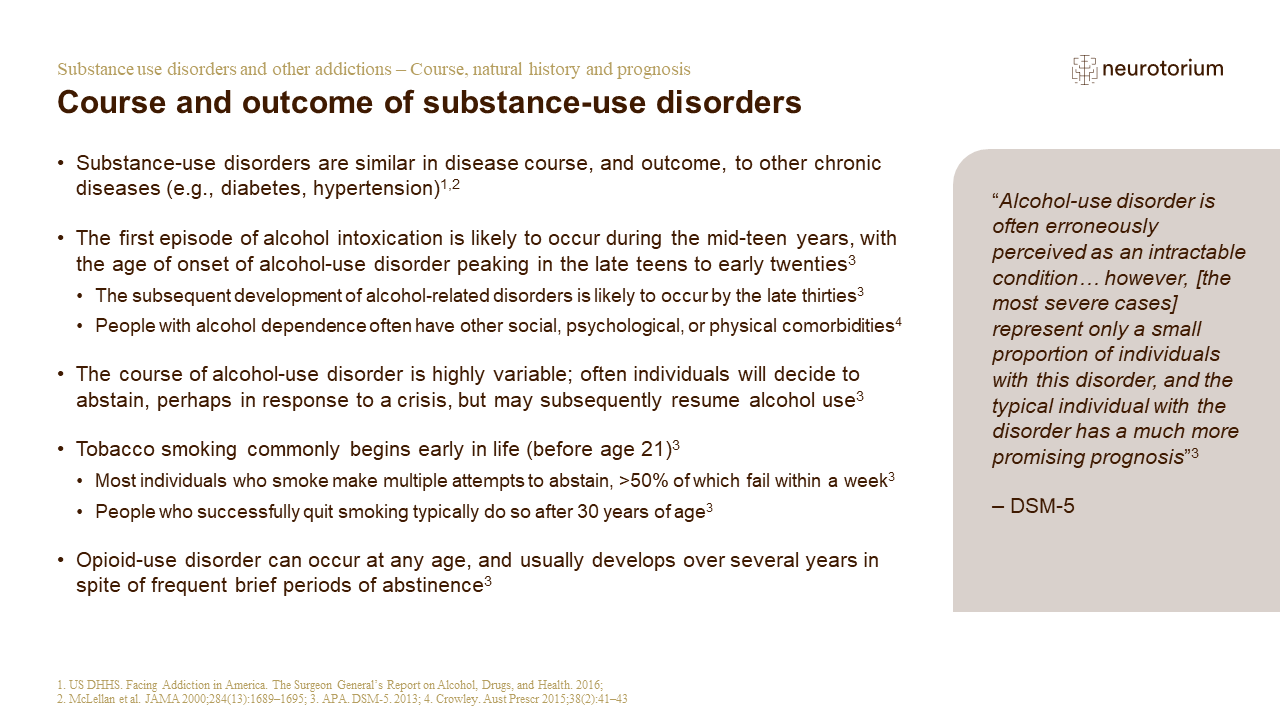
The onset of substance use is commonly seen in individuals in their mid-teens to early twenties, where an individual may increase their use of a substance to the point that problems sufficient to sustain a substance-use diagnosis may develop.[3] Alternatively, some substance-use disorders may begin with exposure to a substance via a medication prescription (e.g., for treatment of anxiety, or somatic complaints).[3] As the individual continues to use the medication, some degree of tolerance may develop whereby a greater dose is required to achieve the same effect.[3] Over time, substance-seeking behaviour becomes more prominent, and withdrawal symptoms may develop.[3]
Non-pathological use of alcohol is, of course, widespread throughout the world.[3] Most people who drink alcohol will drink heavy enough doses to feel intoxicated, but only approximately 20% of these individuals will develop alcohol-use disorder; the key element of the diagnosis of alcohol-use disorder is the use of heavy doses of alcohol leading to repeated distress or functional impairment.[3]