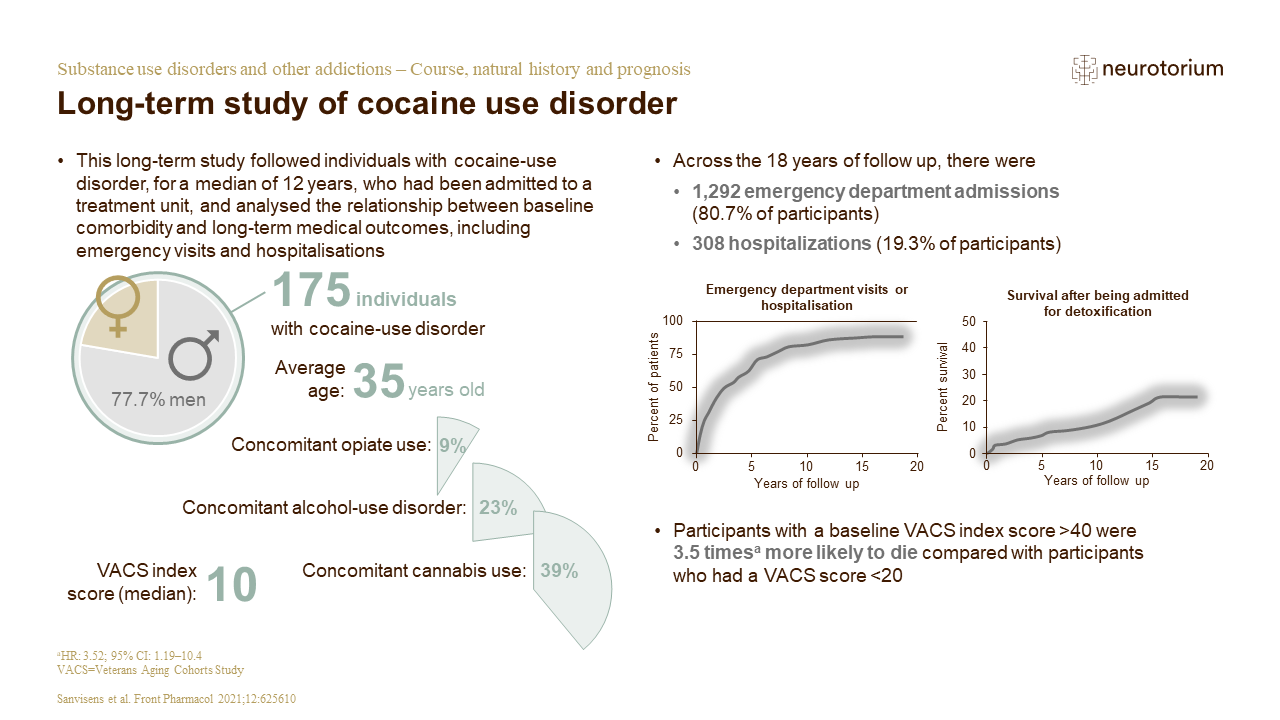
This study followed a cohort of 175 drug users from Spain for 12 years, testing the hypothesis that chronicity of cocaine-use disorder is associated with comorbidity at baseline, and therefore greater healthcare use because of the presence of multiple medical conditions.[1] Comorbidity was assessed using the VACS index (Veterans Aging Cohorts Study – the VACS index assigns a score based on age and specific health parameters ranging from 0–164, with higher score indicating higher comorbidity), which takes into account kidney and liver function, age, haemoglobin levels, and HIV and HCV infections; the VACS therefore reflects the individual’s general health status.[1] The results of the study suggested that participants with a high VACS score at baseline were more likely to die during study follow-up than participants with a lower score, suggesting that the VACS index can be used at baseline to predict the risk of hospitalization and death in people with cocaine-use disorder.[1]
Long-term study of cocaine use disorder