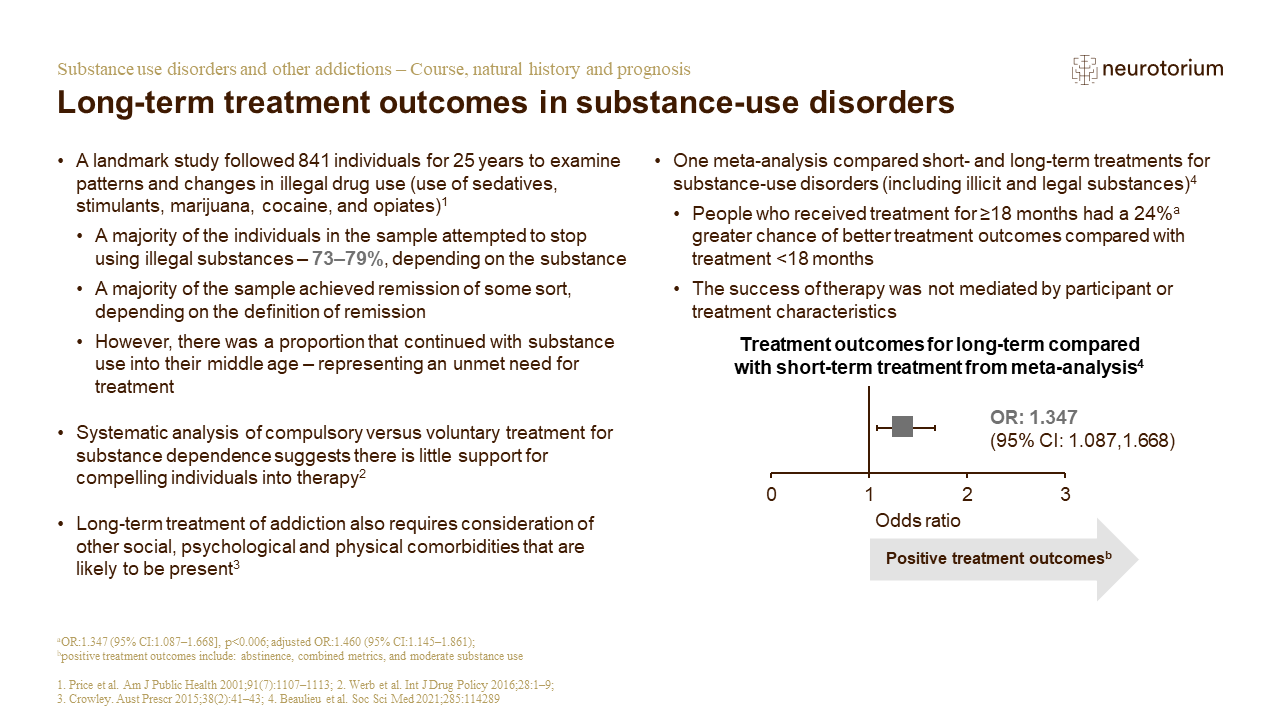
As detailed on the slide, there are many different aspects to long-term addiction therapy, from considering comorbidities,[3] to the potential counter-productive force of compulsory treatment.[2] Generally, data support the effectiveness of planned long-term treatment or support for substance-use disorders, with those who do receive such support having a 24% greater chance of abstaining or reducing their substance use to moderate levels.[4] Given the effectiveness of treatment for substance-use disorders, and the importance of early intervention for minimising harm, some have argued for more research to understand how and why people with substance-use disorders come to recognize and acknowledge their drug problems.[1]
Long-term treatment outcomes in substance-use disorders