

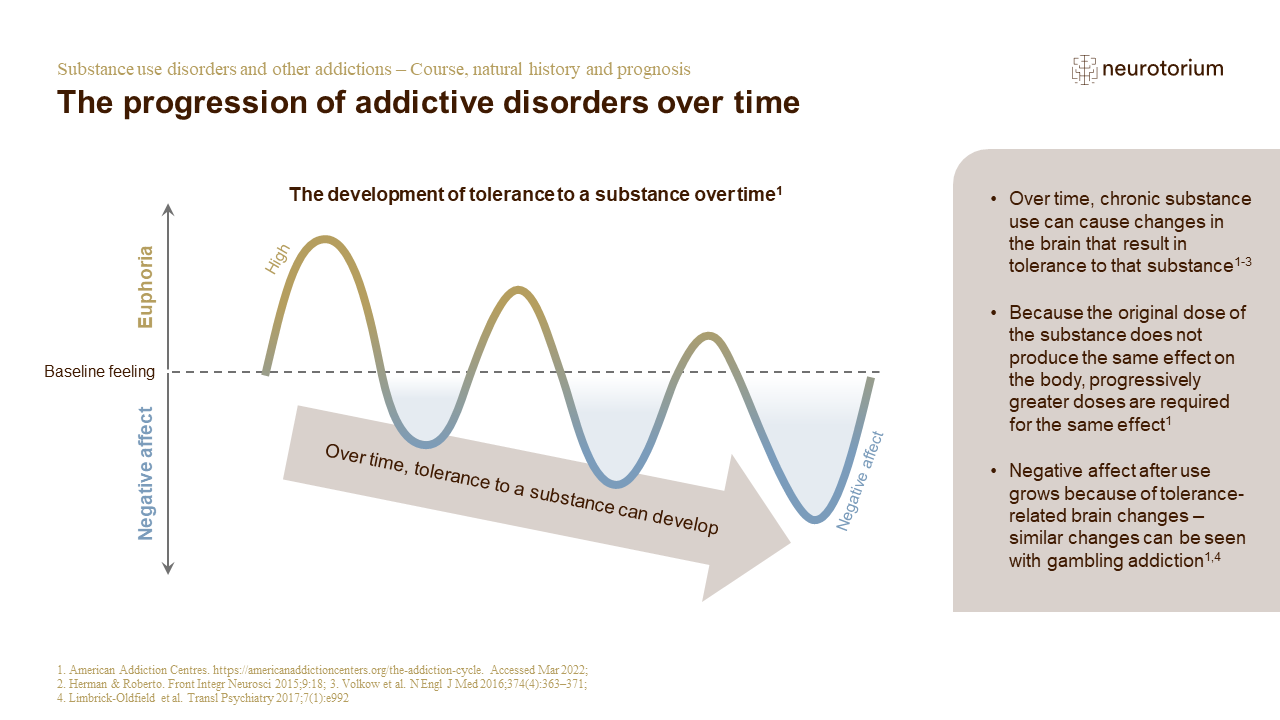
The degree to which tolerance to a substance can develop over time differs between individuals, and between different substances.[5] It is difficult to determine whether and to what degree tolerance to a substance may have occurred.[5] However, laboratory tests can be helpful – for example, if a person has high blood levels of a substance whilst not simultaneously showing the characteristic patterns of intoxication from that substance, this may be evidence of developing tolerance.[5]
Reference:
[1] American Addiction Centres. https://americanaddictioncenters.org/the-addiction-cycle. Accessed March 2022.