

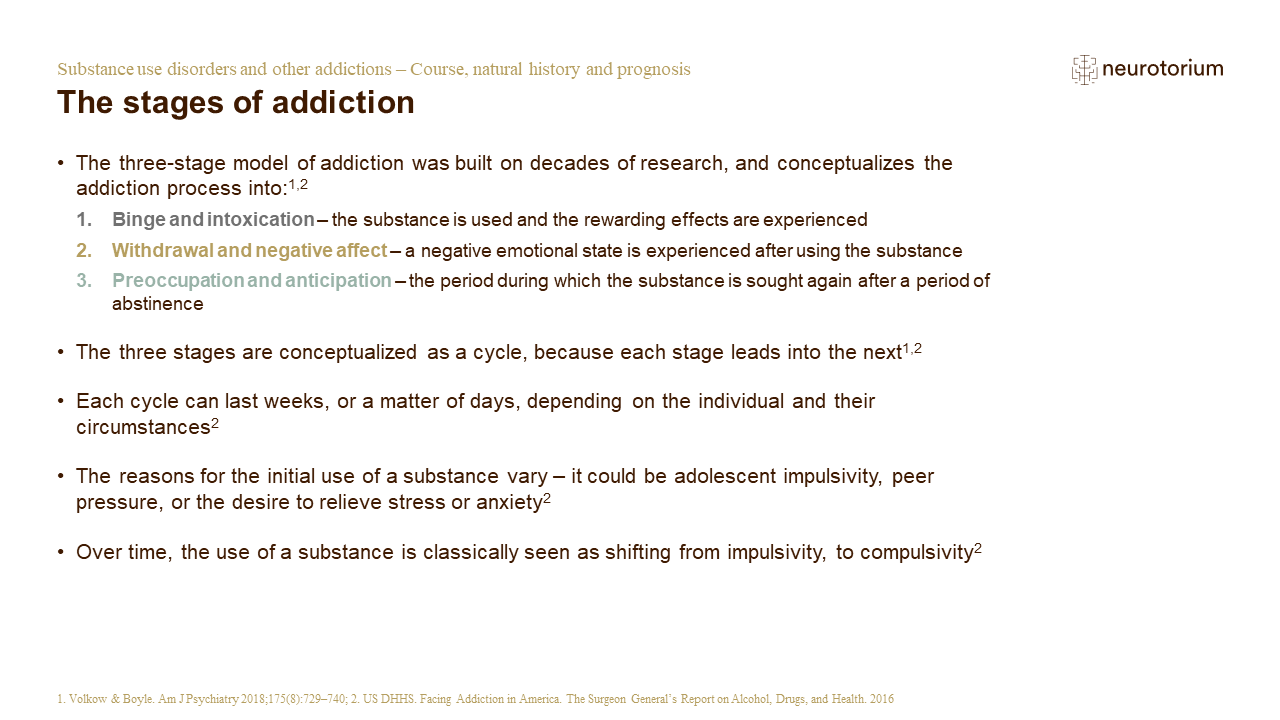
Addiction is a chronic brain disease.[2] It is increasingly recognized that a person with addiction undergoes brain changes as they move through the addiction cycle of binge and intoxication, withdrawal and negative affect, and finally preoccupation and anticipation.[1,2] These changes in the brain are thought to reduce an individual’s ability to control their substance use.[2] More research is needed to understand these brain changes, and how long the changes persist, to better calibrate treatment options for people seeking addiction treatment.[2,3]
References:
[1] Volkow ND, Boyle M. Neuroscience of addiction: relevance to prevention and treatment. Am J Psychiatry 2018; 175 (8): 729–740.