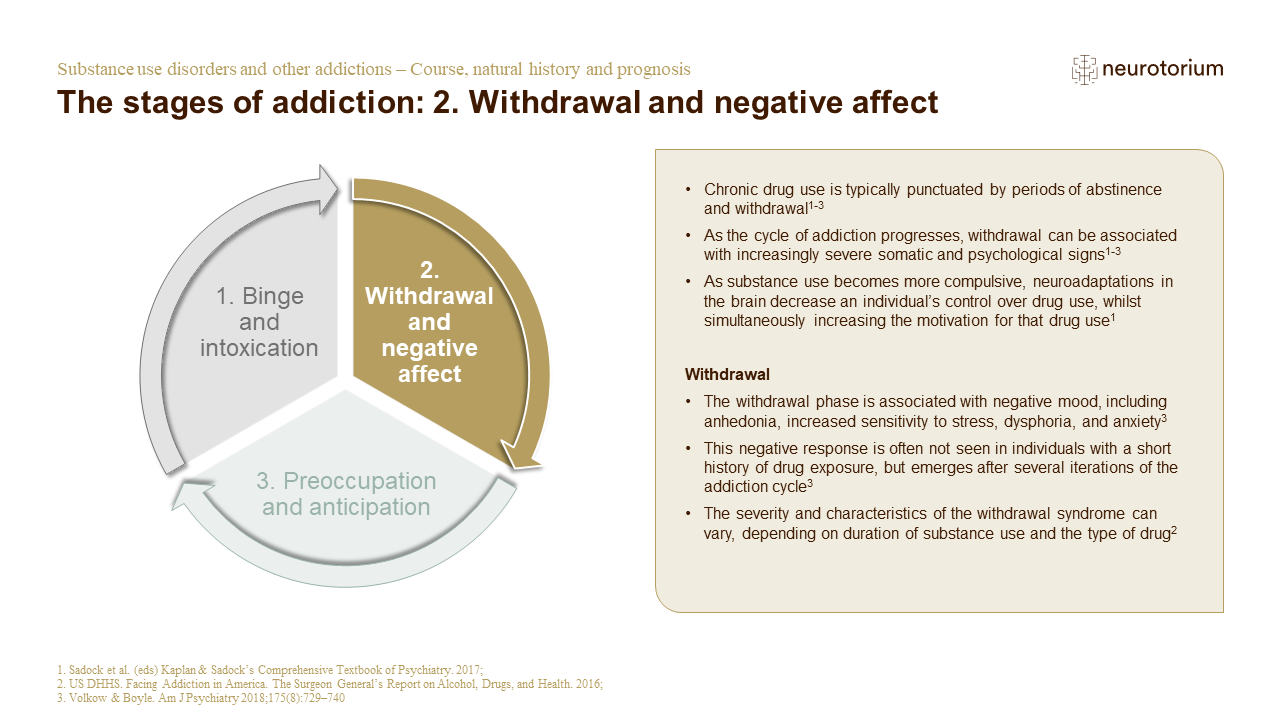
Brain changes occur as the addiction cycle progresses.[3] Changes occur in the forebrain, including in the extended amygdala, involving many different neurotransmitter systems, that result in increased vulnerability to cravings and preoccupations in order to counter the negative affect state.[3] Meanwhile, changes also occur in the dopamine-mediated reward pathways of the brain, which reduce the activity of the motivation circuitry.[3]
The stages of addiction: 2. Withdrawal and negative affect