

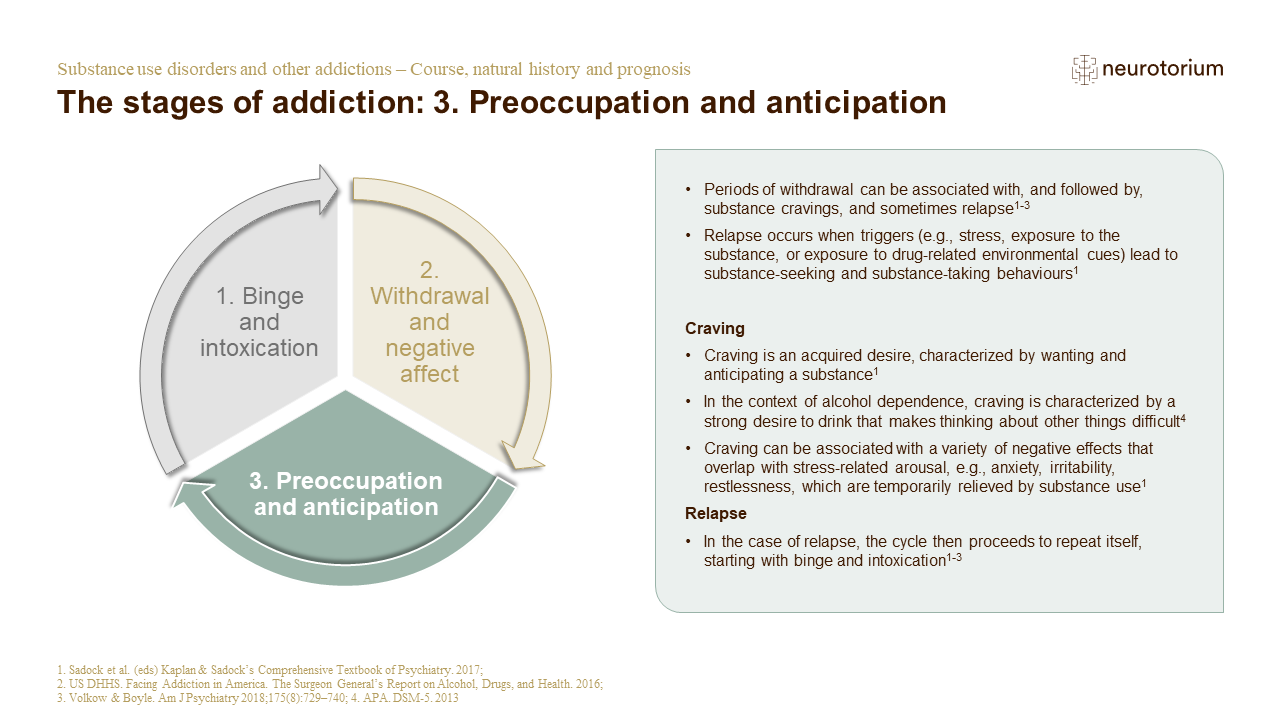
During the preoccupation and anticipation stage, environmental cues associated with the addictive substance elicit a strong dopamine response from the dysregulated reward and motivation circuitry within the brain.[3] Furthermore, in the case of many individuals with addiction, changes in prefrontal regions of the brain controlling executive functioning lessen the potential mediating effect that might otherwise moderate such urges.[3]
Within this stage of the addiction cycle, craving and relapse have received particular attention in the context of treating addiction.[1] The notion of relapse underlies the chronic nature of addiction, and therefore helping to prevent relapse in people with substance-dependence disorder is key to successful treatment.[1]
References:
[1] Sadock BJ, Sadock VA, Ruiz P (eds). Kaplan & Sadock’s Comprehensive Textbook of Psychiatry, 10th edition. Wolters Kluwer, 2017.