

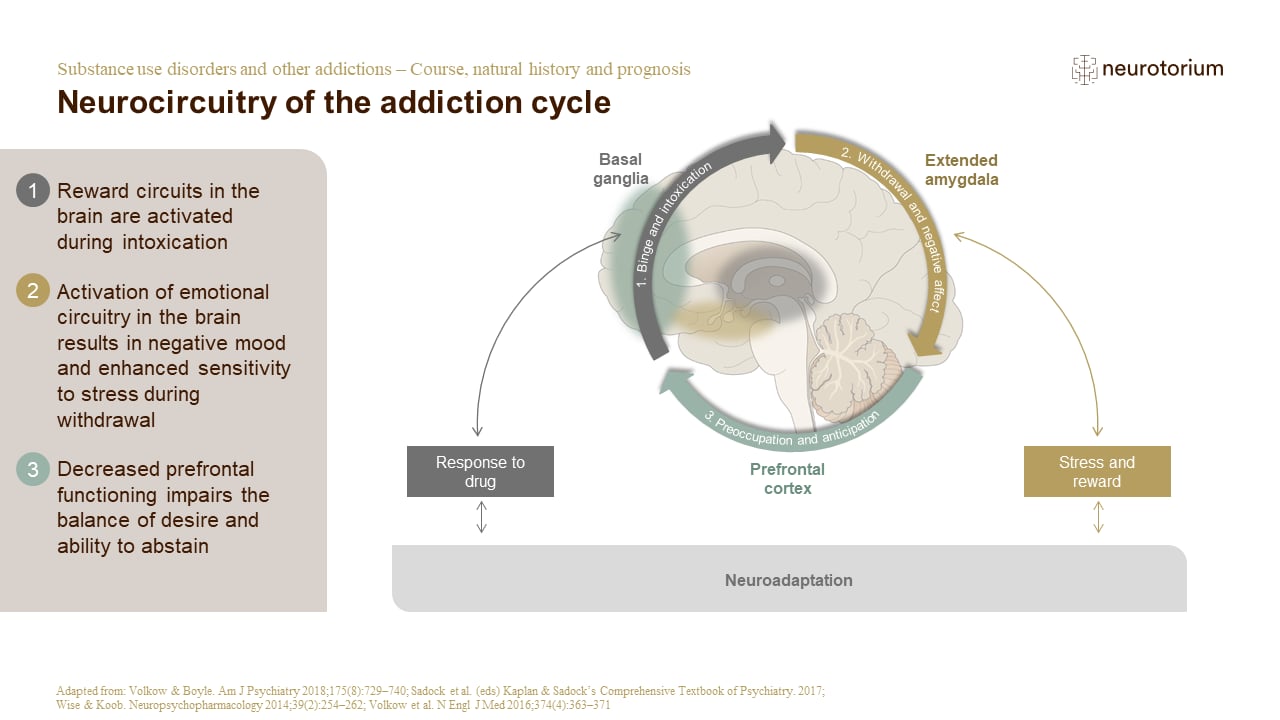
The diagram on the slide illustrates the interaction between neurocircuitry and behaviour of addiction, divided into binge/intoxication, withdrawal/negative affect, and preoccupation/anticipation, each of which is associated with the activation of certain neurological pathways.
Three areas of the brain are particularly important for the addiction cycle:[2,5]
- The basal ganglia are a group of structures within the brain that help coordinate body movements, and are also important for learning behaviours and habits. Two regions of the basal ganglia – the nucleus accumbens and the dorsal striatum – are particularly involved in the neurobiology of addiction.
- The extended amygdala is located beneath the basal ganglia. It regulates responses to stresses (e.g., so-called ‘fight or flight’) and interacts with the hypothalamus, which is responsible for hormonal control (e.g., signalling to the pituitary gland to control the release of cortisol).
- The prefrontal cortex is at the front of the brain. This region of the brain is involved in complex cognition, and executive functioning.
References:
[1] Volkow ND, Boyle M. Neuroscience of addiction: relevance to prevention and treatment. Am J Psychiatry 2018; 175 (8): 729–740.