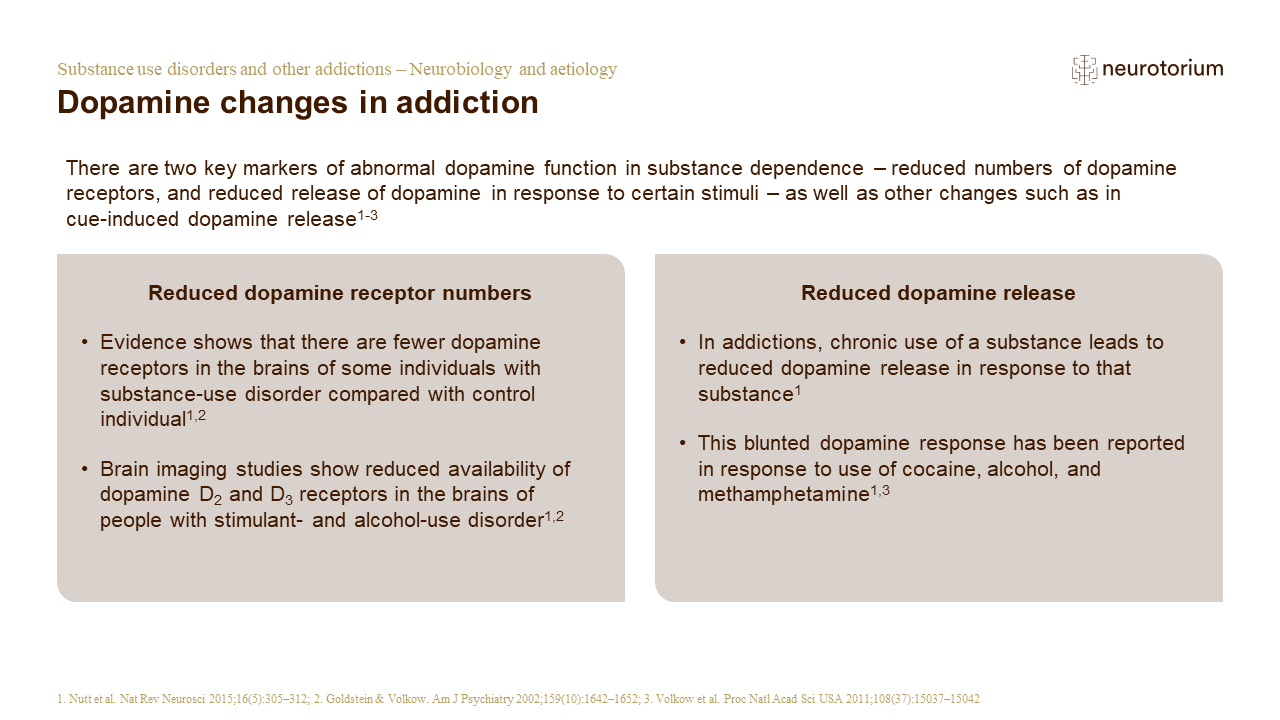
There is something of a paradox relating to the role of dopamine in addiction. Individuals with low levels of striatal dopamine receptors reported greater pleasurable effects from stimulant use than those with normal levels.[1] However, the first of the markers of abnormal dopamine function in addiction discussed on the slide – that there are reduced numbers of dopamine receptors in the addicted brain – presents a challenge to the dopamine model of addiction.[1] Because, if dopamine is responsible for the ‘high’ of drug use, then reduced receptor availability perhaps should result in less-rewarding drug effects.[1]
Dopamine changes in addiction