

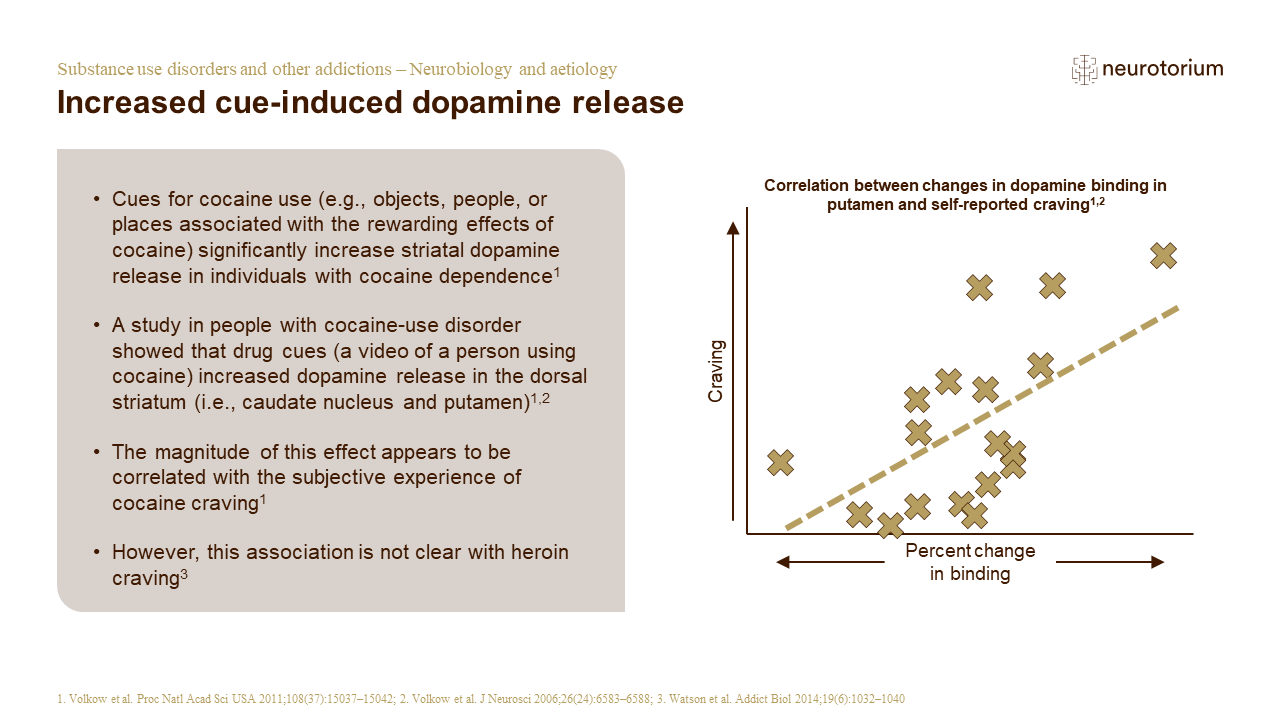
In the study described on the slide, videos of either neutral content or cocaine-use cues were shown to 18 people with cocaine-use disorder, and changes in dopamine binding in the brain were analysed using [11C]raclopride PET.[2] Raclopride binding was reduced in the dorsal striatum, as shown on the slide, but not in the ventral striatum where the nucleus accumbens is located; these changes in binding appeared to correlate with self-reported measures of craving.[2] Craving is a key part of the process of addiction, and these data point implicate the dorsal striatum in the neurobiology of craving and addiction.[1,2]
References:
[1] Volkow ND, Wang GJ, Fowler JS, et al. Addiction: beyond dopamine reward circuitry. Proc Natl Acad Sci USA 2011; 108 (37): 15037–15042.