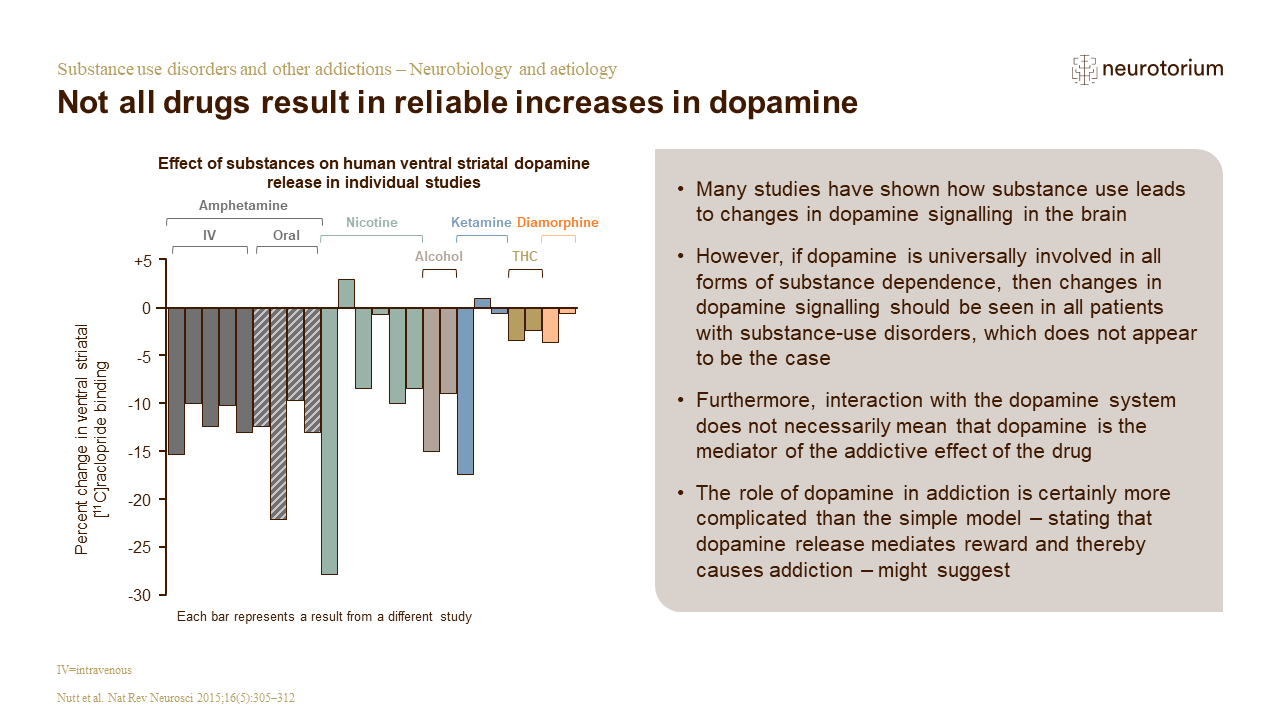
Neuroimaging studies have furthered the understanding of addiction and the role of dopamine in substance use and dependence.[1] However, the conclusions from such studies are limited by the constraints of technology.[1] For example, many available radiotracers cannot distinguish between dopamine D2 and D3 receptors, and different radiotracers have different useful linear ranges wherein quantifiable differences can be discerned between results.[1] Some have argued that the role of dopamine in addiction is only part of the picture; other neurotransmitter systems play a role in addiction, and addiction to different substances may be driven by a different balance of neurochemical changes in the brain.[1]
Not all drugs result in reliable increases in dopamine