

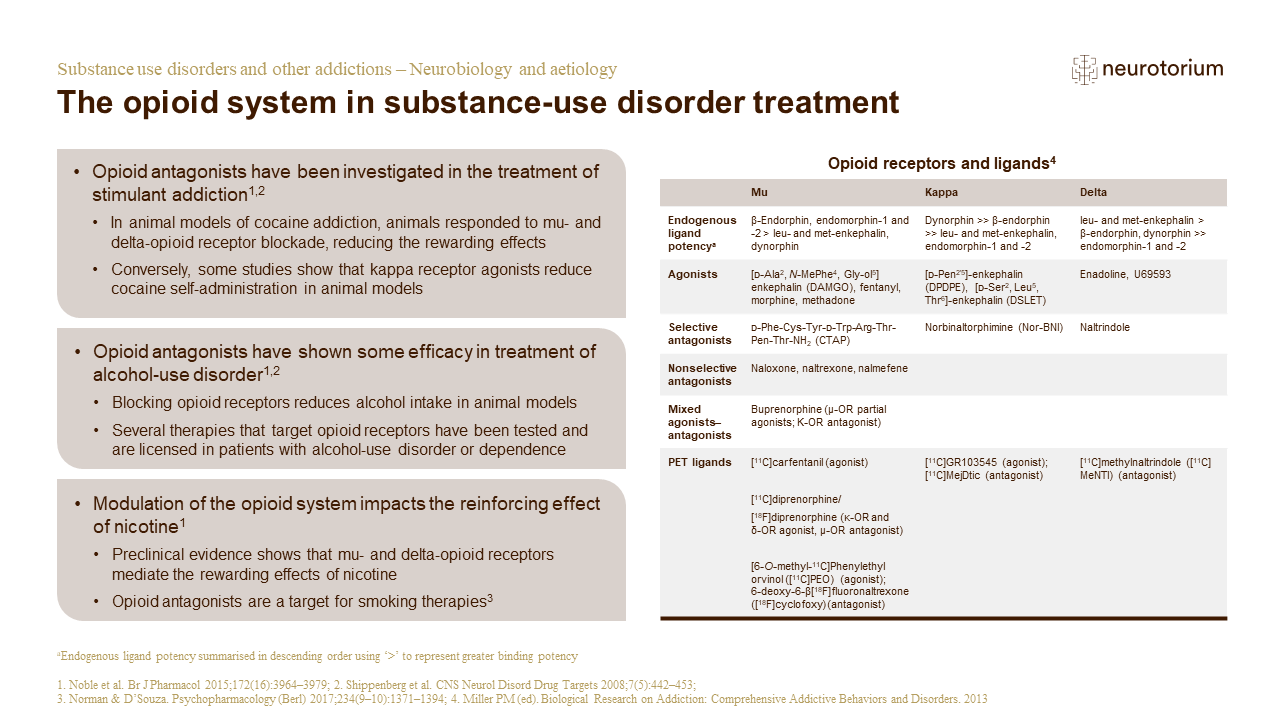
There are several unmet needs in translating the current understanding of the endogenous opioid system into treatments for addiction.[5]
- Fuller exploration of the genetics of opioid-use disorder – whilst opioid-use disorder appears to some extent heritable, there are remarkably few genome-wide studies into the disorder.
- A better understanding of the interaction of opioid drugs with the brain – more research is needed in humans, rather than in animal models wherein the complexity of comorbidity can be overlooked.
- Integration of animal and human models – comparing human data, including post mortem, with animal studies may enhance the reliability of preclinical models.
- Better understanding of the function of the endogenous opioid system – the endogenous opioid system is a complex interconnected network of different peptides and receptors, which interact with other neurochemical systems. Understanding this complexity is key to moving forward with precision treatments for opioid-use disorder, and other addictions.
Reference:
[1] Noble F, Lenoir M, Marie N. The opioid receptors as targets for drug abuse medication. Br J Pharmacol 2015; 172 (16): 3964–3979.