

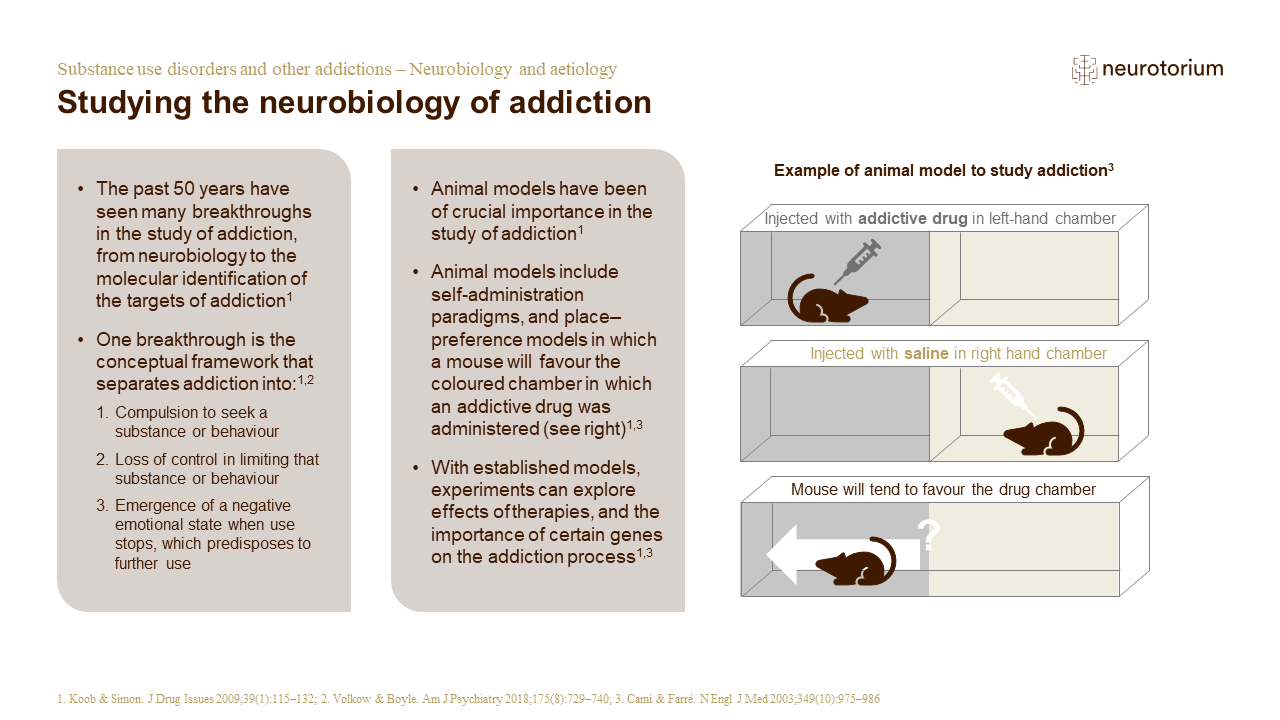
Whilst no animal model of addiction completely replicates the condition of a human brain during substance dependence, models provide a way of investigating components of the process of addiction.[1] Animal models of the rewarding effects of substances include self-administration paradigms and the conditioned place–preference model, as outlined on the slide.[1] Models of the negative reinforcing effects of addiction have also been developed, including models of craving and of compulsive drug use.[1]
Reference:
[1] Koob GF, Simon EJ. The neurobiology of addiction: where we have been and where we are going. J Drug Issues 2009; 39 (1): 115–132.
[3] Camí J, Farré M. Drug addiction. N Engl J Med 2003; 349 (10): 975–986.