

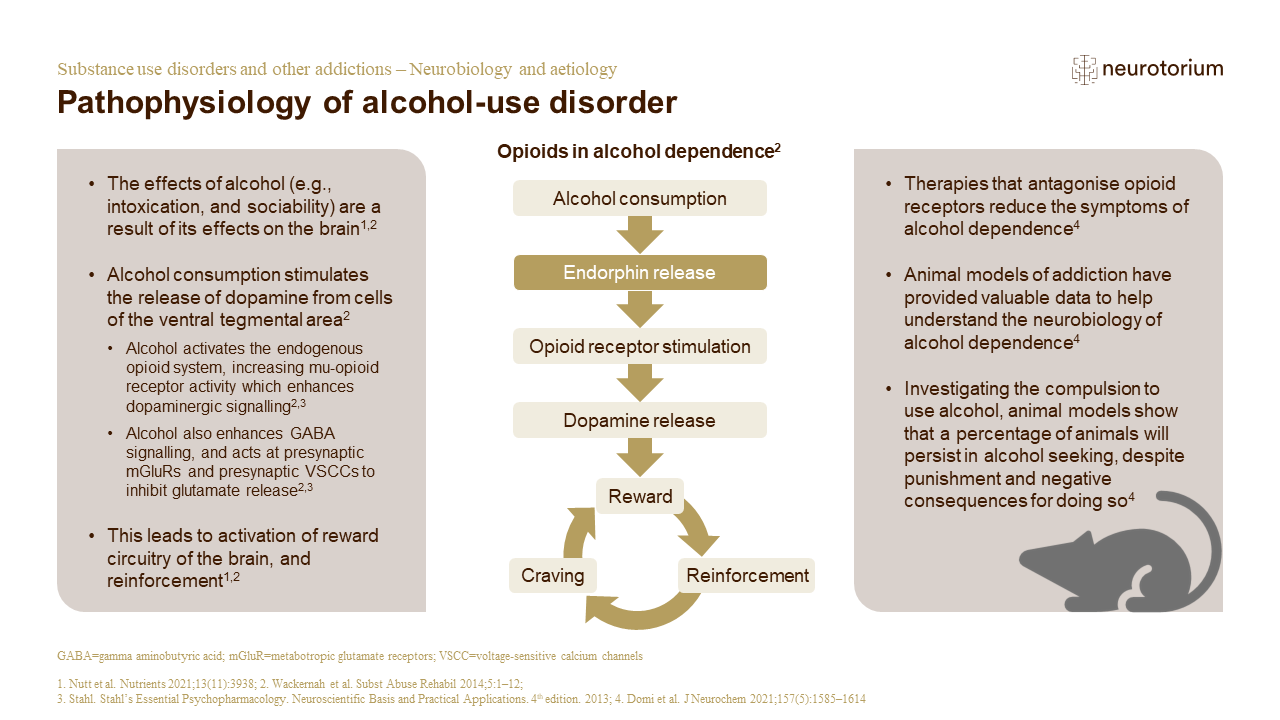
Animal models have been used to study alcohol-seeking behaviour, and the reinstatement of alcohol use in response to environmental stresses or cues.[4] Animal models to investigate the compulsion to use alcohol have also been widely studied.[4] These include a model wherein an alcohol-trained mouse is presented with tainted alcohol that has a bitter taste and the persistence of self-administration is tested, and models where alcohol is administered along with negative consequences, such as a mild electric shock.[4] As at least a partial vindication of the preclinical work focussing on opioid mechanisms of alcohol dependence, there are licensed pharmacotherapies for alcohol dependence that antagonise opioid receptors.[4]
Reference:
[1] Nutt D, Hayes A, Fonville L, et al. Alcohol and the brain. Nutrients 2021; 13 (11): 3938