

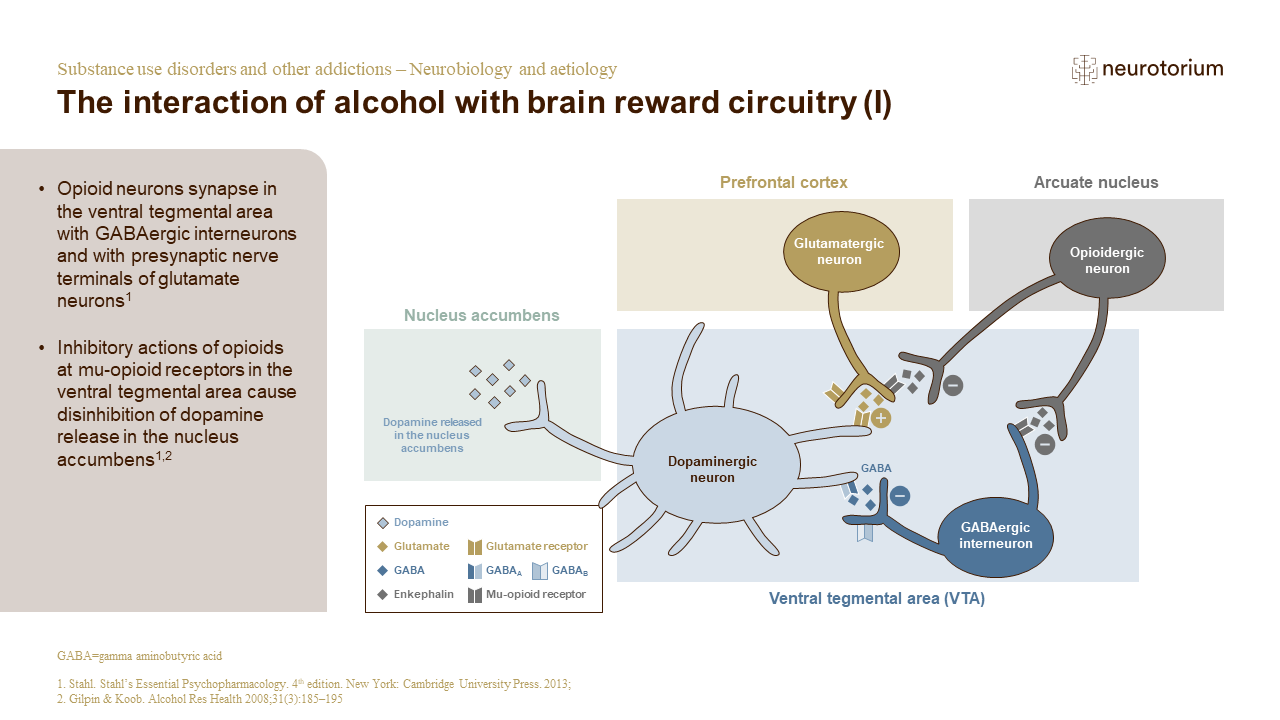
Alcohol interacts with neurons within the ventral tegmental area in several ways.[1]
- Alcohol acts directly or indirectly on mu-receptors, causing the release of endogenous opioids (e.g., enkephalin).
- Alcohol also acts at presynaptic metabotropic glutamate receptors (mGluRs) and presynaptic voltage-sensitive calcium channels (VSCCs) to inhibit glutamate release.
- Alcohol can enhance GABA release, by antagonising presynaptic GABAB receptors, and through direct or indirect actions at GABAA receptors.