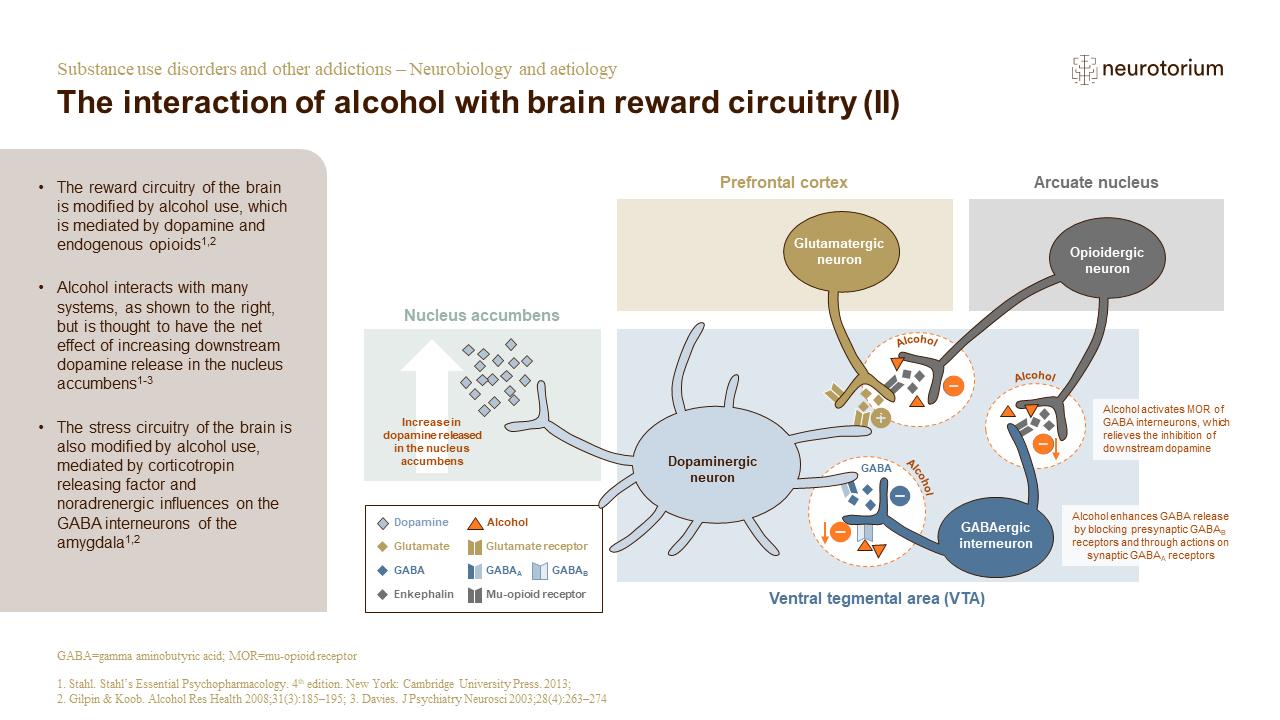
The slide shows how alcohol may interact with the neurotransmitter systems of the brain’s reward pathway, by inhibiting GABA signalling in the ventral tegmental area which in turn disinhibits dopaminergic projections to the nucleus accumbens.[2] There are also other pathways with which alcohol is thought to interact, including other endogenous opioid pathways and potentially the endogenous cannabinoid system.[2]
The interaction of alcohol with brain reward circuitry (II)