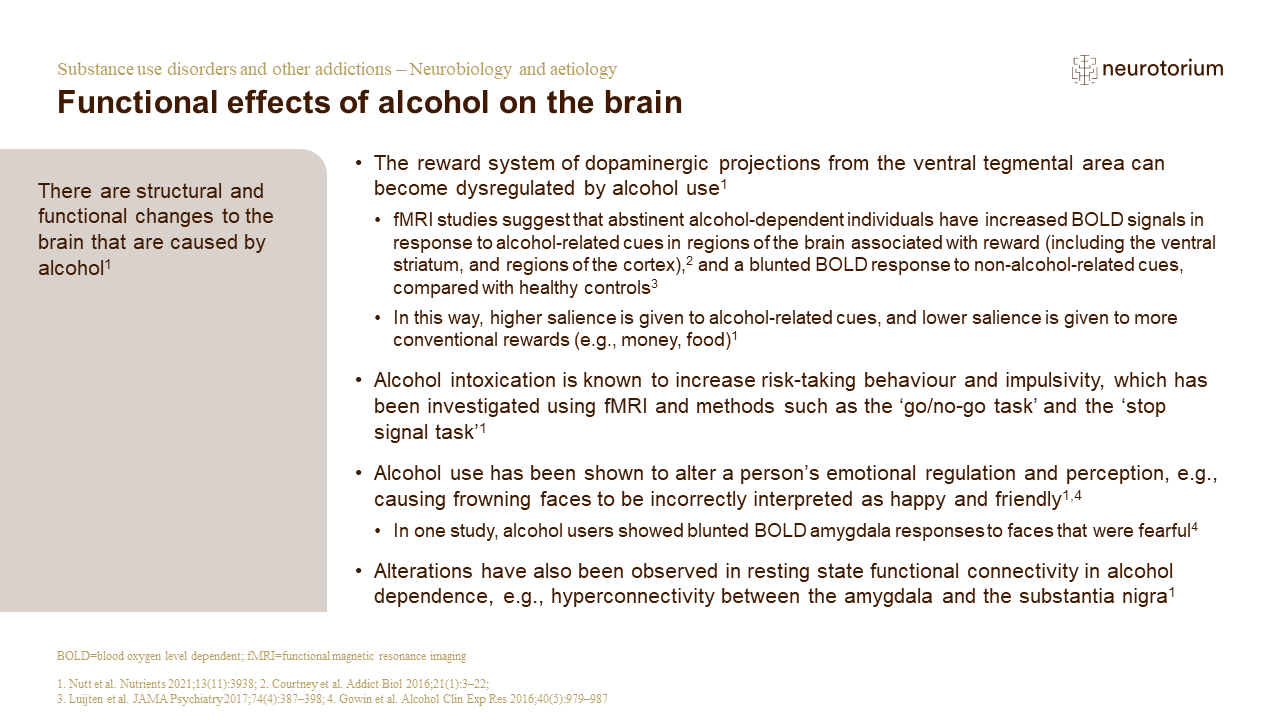
Imaging techniques, such as functional magnetic resonance imaging (fMRI), have proven to be powerful techniques for interrogating the functional brain changes underlying alcohol use and dependence.[1,5] An important focus of future research should be to better understand.[1]
References:
[1] Nutt D, Hayes A, Fonville L, et al. Alcohol and the brain. Nutrients 2021; 13 (11): 3938.
[2] Courtney KE, Schacht JP, Hutchison K, et al. Neural substrates of cue reactivity: association with treatment outcomes and relapse. Addict Biol 2016; 21 (1): 3–22.
[3] Luijten M, Schellekens AF, Kühn S, et al. Disruption of reward processing in addiction: an image-based meta-analysis of functional magnetic resonance imaging studies. JAMA Psychiatry 2017; 74 (4): 387–398.
[4] Gowin JL, Vatsalya V, Westman JG, et al. The effect of varenicline on the neural processing of fearful faces and the subjective effects of alcohol in heavy drinkers. Alcohol Clin Exp Res 2016; 40 (5): 979–87.
[5] Gilpin NW, Koob GF. Neurobiology of alcohol dependence: focus on motivational mechanisms. Alcohol Res Health 2008; 31 (3): 185–195.