

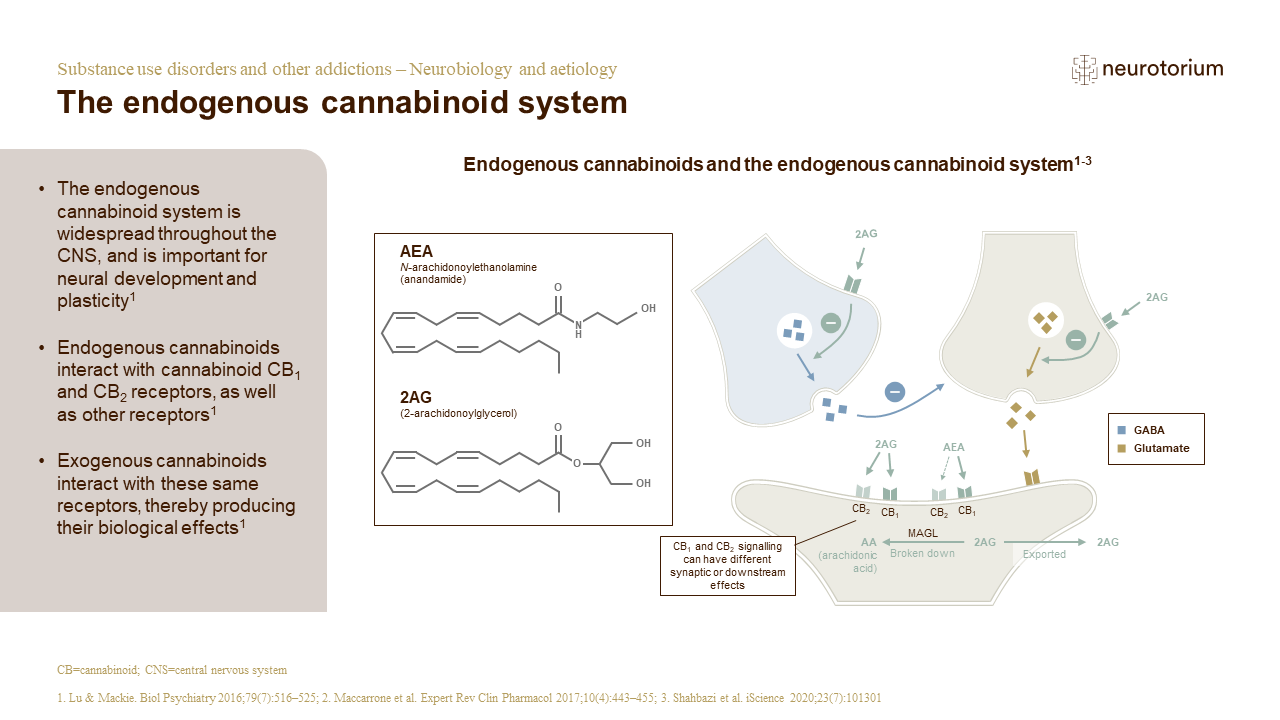
Despite their seemingly similar structure, the cannabinoids anandamide (AA) and 2-arachidonoyl glycerol (2-AG) are produced by, and broken down by, different pathways.[1] This distinction allows for the endocannabinoid system to respond differently to these two similar chemicals, which have developed separate physiological roles.[1] The slide shows how the components of the endocannabinoid system interact.[1,2,3] The functions of CB1 and CB2 receptors are mediated partly by their localisation; whilst CB1 receptors are widespread in the central nervous system, but are found particularly in the cortex, basal ganglia, hippocampus, and cerebellum of the brain, CB2 receptors are found at lower levels, mainly within the immune system, localised to microglia, vascular components of the brain, as well as certain neurons.[1,3]
References:
[1] Lu HC, Mackie K. An introduction to the endogenous cannabinoid system. Biol Psychiatry 2016; 79 (7): 516–525.