

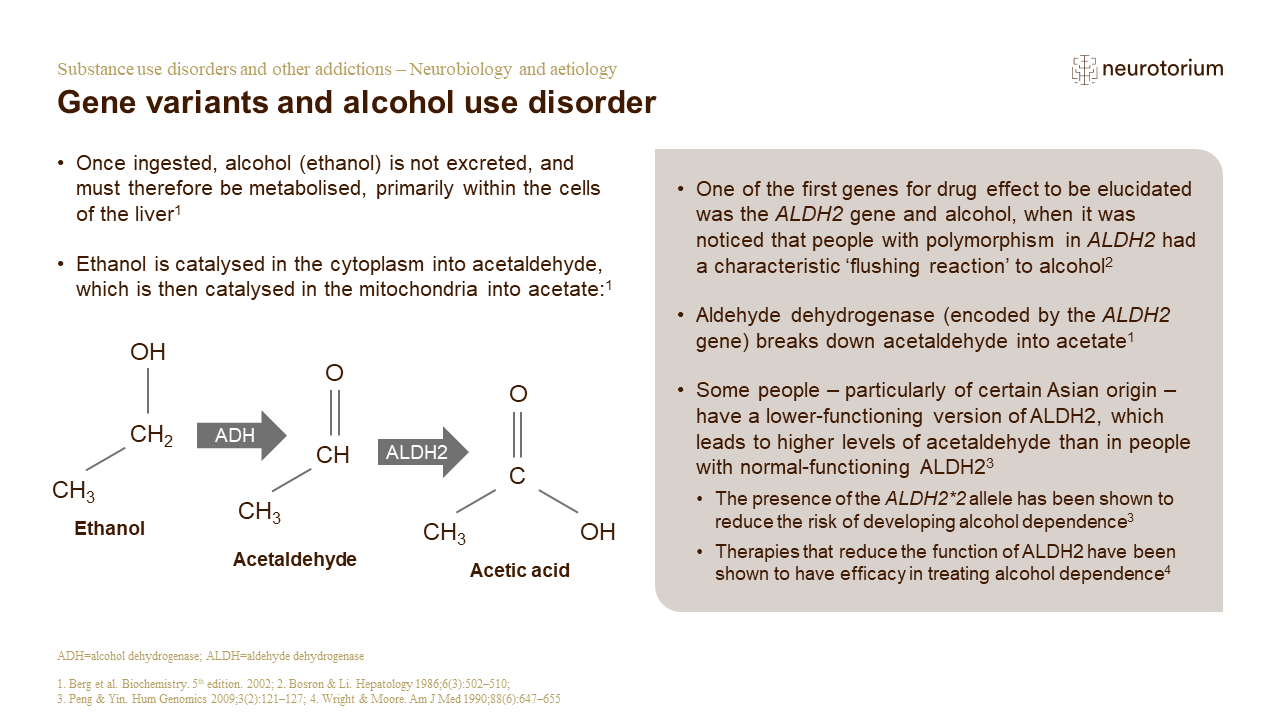
Genetic variations within the pathway responsible for the metabolism of ingested alcohol, found across and within populations, can lead to increased or decreased levels of the breakdown products along this pathway.[Peng & Yin, 2009] The toxicological effects of alcohol are dependent on the concentrations of ethanol and its metabolite acetaldehyde, which are affected by genetic variations in the efficiency of the metabolic pathway.[Berg et al., 2002; Peng & Yin, 2009] When the flushing reaction – caused by reduced functioning of aldehyde dehydrogenase – was investigated, a speculation at the time was that people who drink heavily in spite of the flushing reaction to alcohol may be at a greater risk of tissue damage, and subsequent liver and brain damage.[Bosron et al., 1986]
References:
[1] Berg JM, Tymoczko JL, Stryer L. Biochemistry. 5th edition. WH Freeman and Company; New York. 2002.
[4] Wright C, Moore RD. Disulfiram treatment of alcoholism. Am J Med 1990; 88 (6): 647–655.