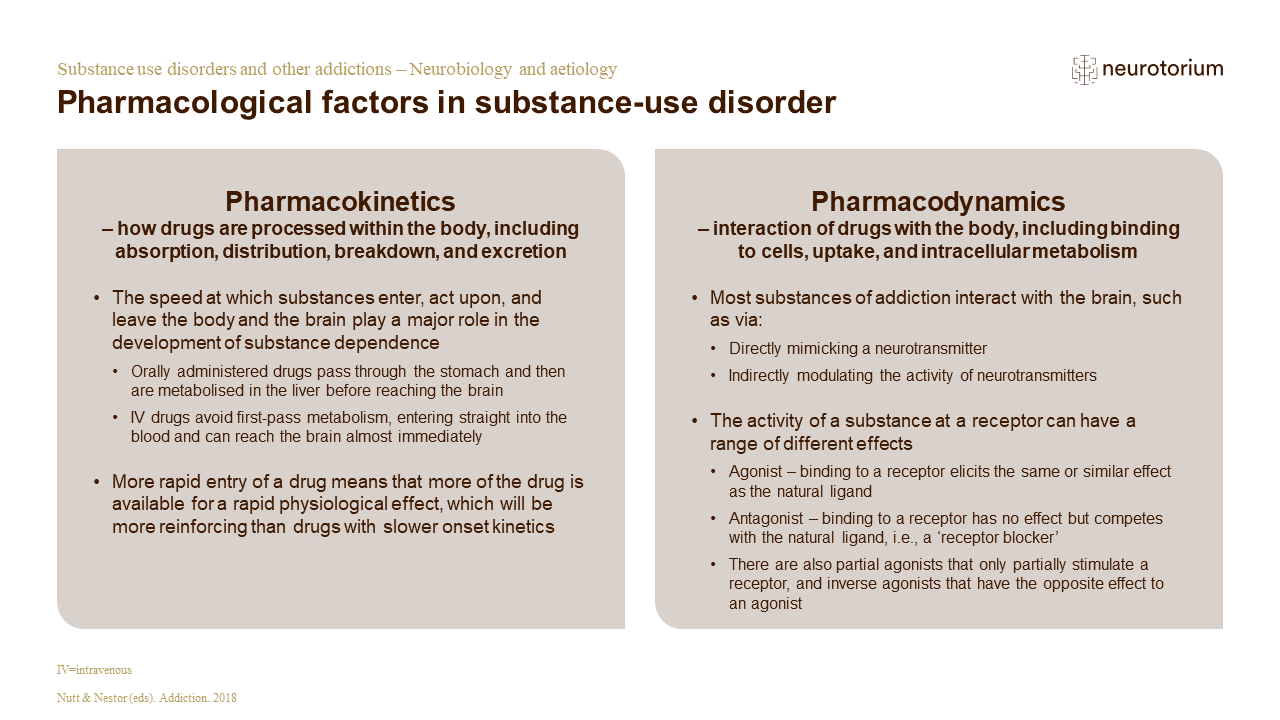
When considering the addictive potential of substances of abuse, it is important to consider their pharmacokinetics and pharmacodynamics. Many addictive substances result in increases in dopamine in the brain, which drives reward, but the substance-induced increase can be exaggerated compared with dopamine responses to naturally pleasurable activities.[2] Additionally, a more rapid onset of dopamine increase (e.g., following intravenous administration of a substance) may make the substance more rewarding compared with substances with a slower onset, or with a more rapid clearance from the body.[2] The maximum effect results when the greatest possible quantity of a stimulant is delivered to the brain in the shortest possible time.[1] Evidence suggests that chronic substance use can alter the functioning of the brain, although this is subject to genetic polymorphisms and individual differences.[3]
Pharmacological factors in substance-use disorder