

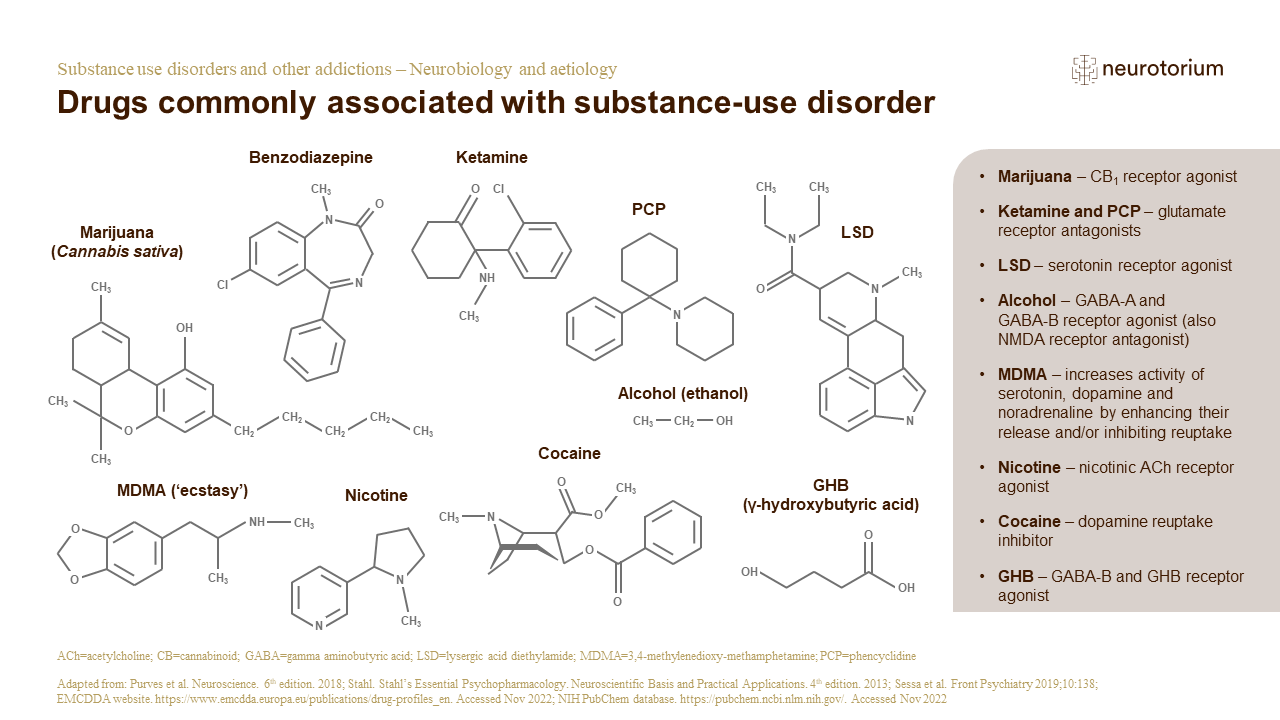
There are many drugs of abuse, with varying kinetics, and different interactions with neurotransmitter systems.[3,4,5] Some drugs of abuse have sedative effects (such as the GABA agonist alcohol, and opioids), whereas others have stimulating effects (such as the dopamine reuptake inhibitor cocaine, and the acetylcholine receptor agonist nicotine).[3,5]
References:
[1] European Monitoring Centre for Drugs and Drug Addiction (EMCDDA) website. Available at: https://www.emcdda.europa.eu/publications/drug-profiles_en. Accessed November 2022.
[2] National Institutes of Health (NIH) PubChem database. Available at: https://pubchem.ncbi.nlm.nih.gov/. Accessed November 2022.