

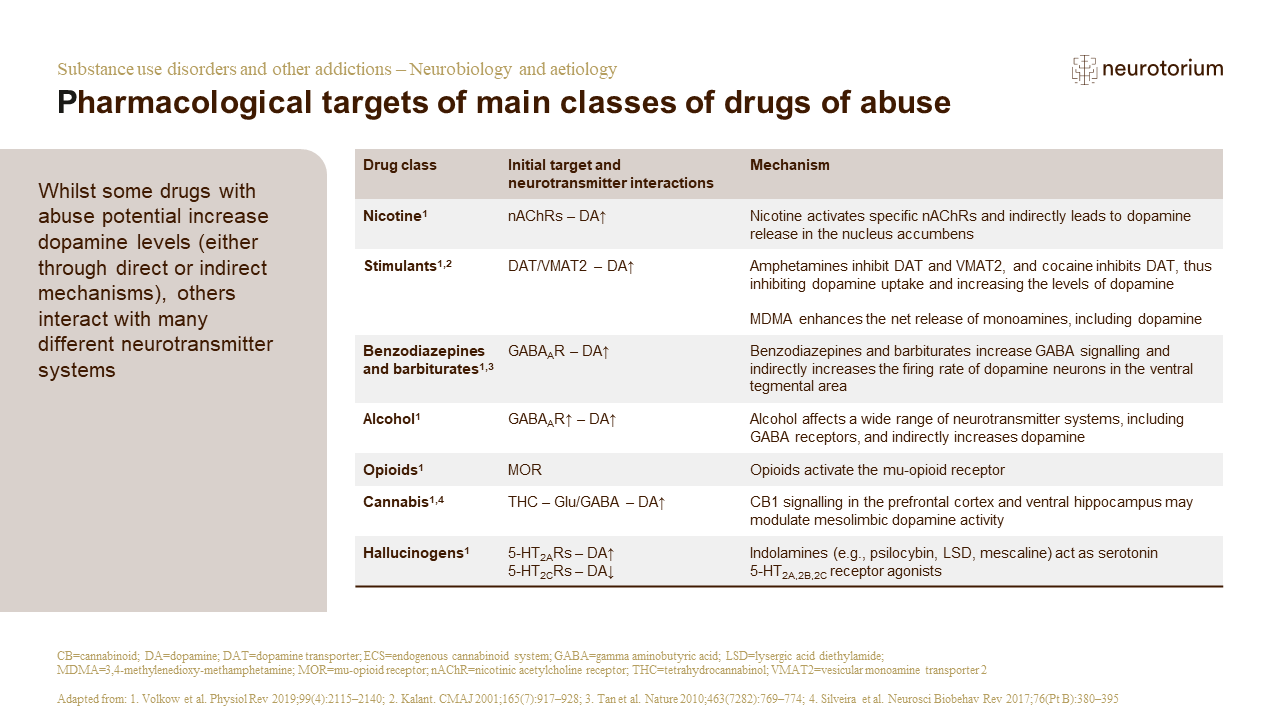
As shown on the slide, some drugs with addictive potential increase the levels of dopamine in the brain.[1] However, many drugs of abuse engage with other neurotransmitter systems, including glutamate and GABA.[1] Whilst the importance of dopamine in addiction has been well studied, the importance of some of these other neurotransmitter systems is less elucidated and should not be underestimated.[1]
Reference:
[1] Volkow ND, Michaelides M, Baler R. The neuroscience of drug reward and addiction. Physiol Rev 2019; 99 (4): 2115–2140.