

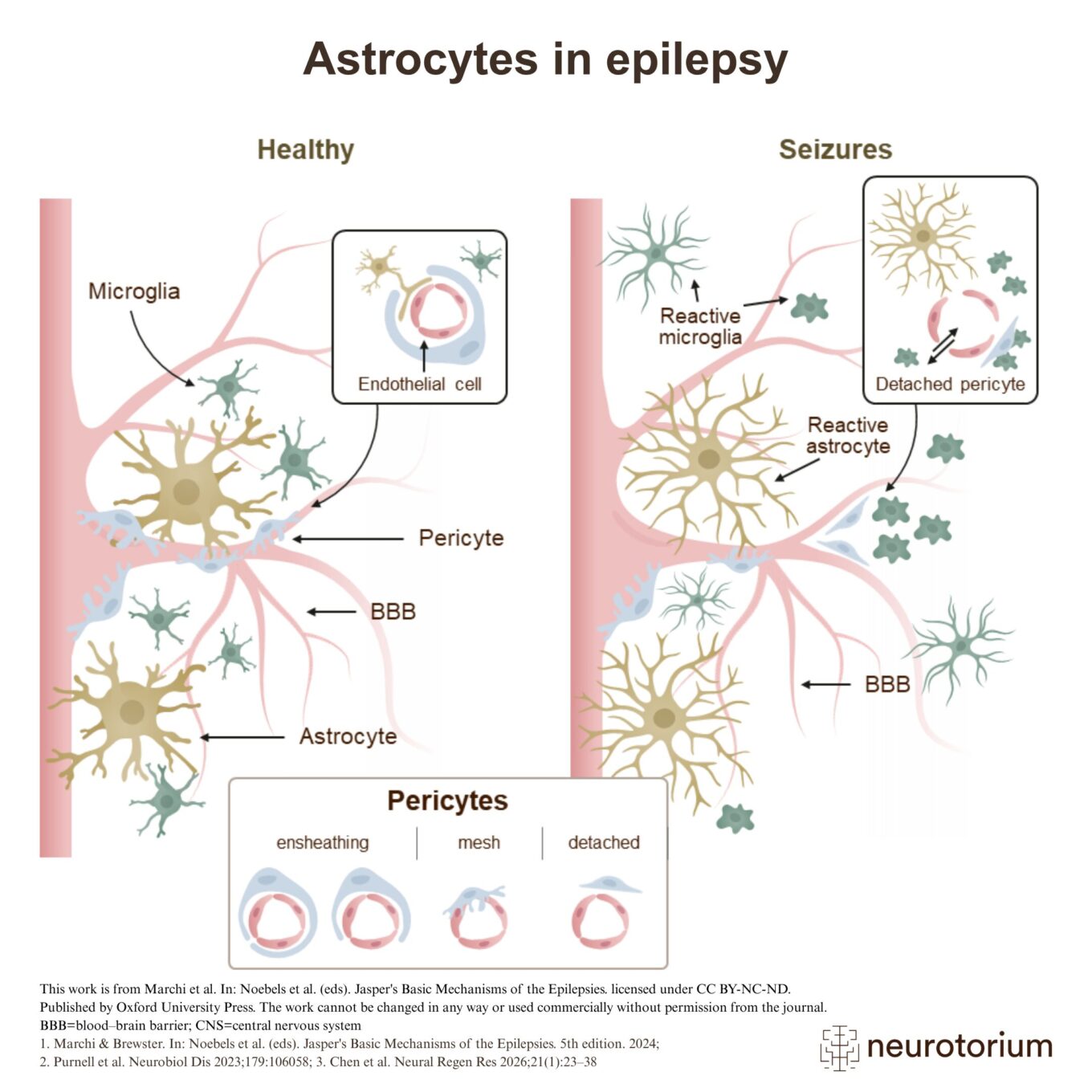
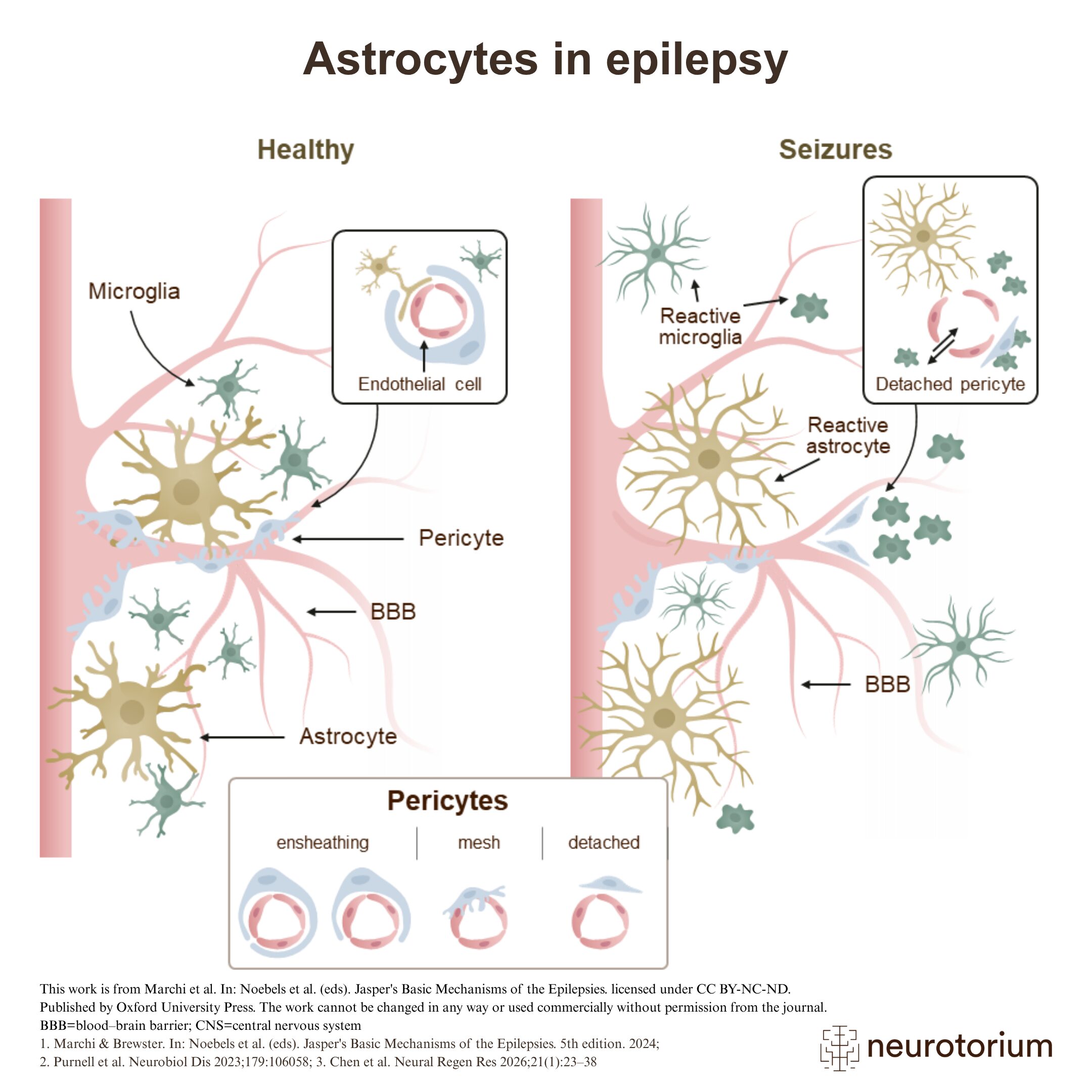
In epilepsy, many of the cells that support normal neural functioning become reactive or
pro-inflammatory, including microglia, and astrocytes.1 Astrocytes are crucial to the brain, they maintain the blood–brain barrier and neuronal homeostasis, therefore contributing to synaptic transmission and neuronal excitability.23
Astrocyte dysregulation contributes to epilepsy in several ways:2,3
- A decreased capacity to remove glutamate from the synapse, contributing to increased glutamate availability
- Dysregulated adenosine metabolism
- Impaired ion and water homeostasis
BBB=blood–brain barrier; CNS=central nervous system
Related content
In this video, Professor Dr. Nathalie Jetté reviews depression as a common yet often under-recognized comorbidity in epilepsy.
In this video, Professor Dr. Gretchen Birbeck examines epilepsy-associated stigma as a global public-health challenge

In this video, Professor Dr. Jacqueline French reviews practical, first-line decision-making for anti-seizure medication selection