

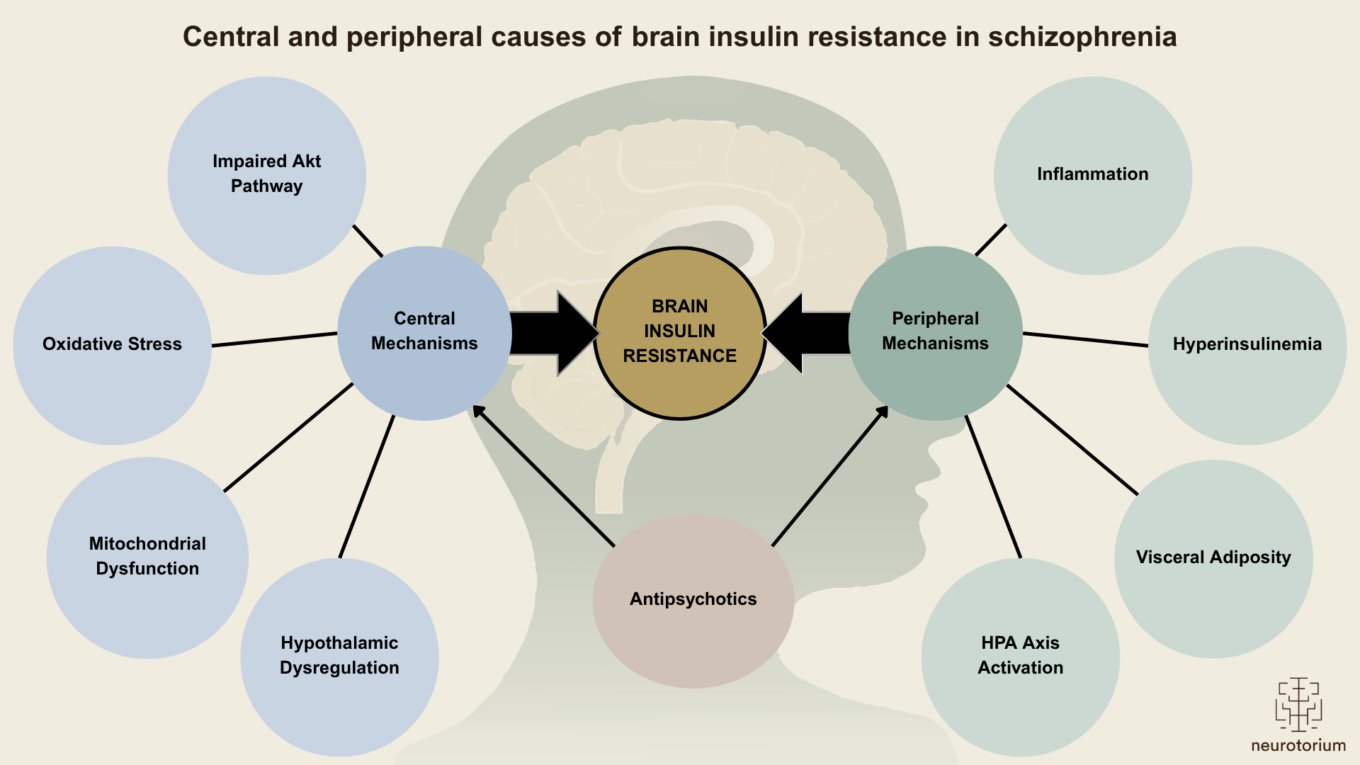
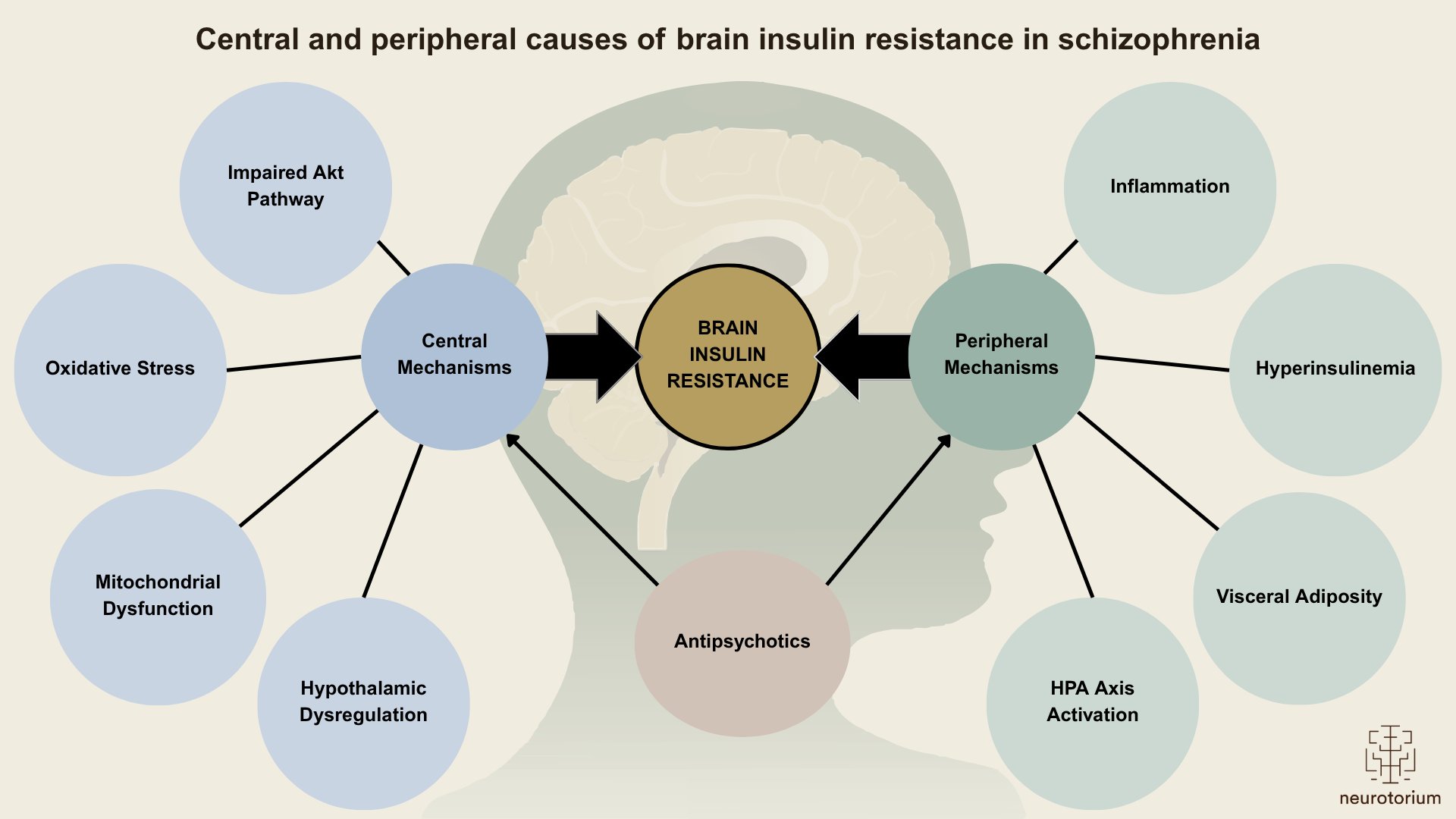
Multiple interconnected pathways may underlie impaired brain insulin signaling in schizophrenia. These include both central/neurobiological mechanisms (i.e., neuroinflammation, mitochondrial dysfunction, Akt pathway dysfunction, oxidative stress) and peripheral mechanisms (i.e., visceral adiposity, increased insulin release, chronic stress, and inflammation). Additionally, antipsychotic medications exacerbate both peripheral and central mechanisms, contributing to increased appetite and weight gain, increased insulin release, increased hepatic glucose production, and decreased glucose uptake by skeletal muscle.
Related content
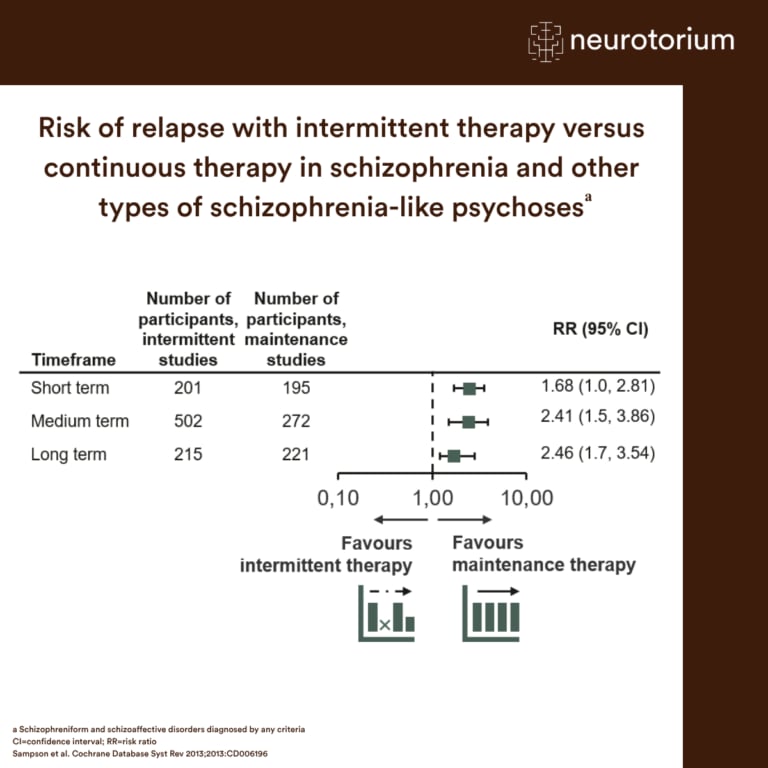
Continuous maintenance therapy is associated with a lower risk of relapse than intermittent treatment, supporting ongoing treatment strategies in schizophrenia and related psychotic disorders.
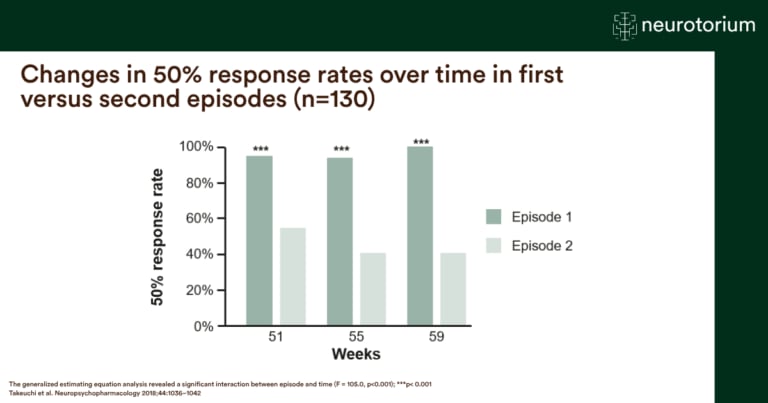
Treatment response tends to be higher during a first episode than during subsequent episodes, emphasizing the importance of early intervention and effective management.
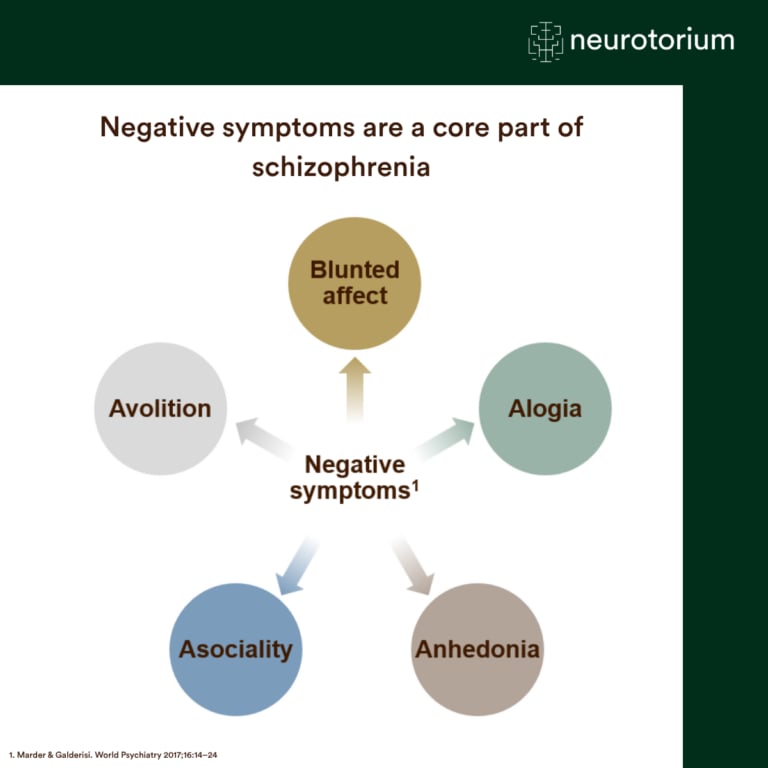
Negative symptoms are a core feature of schizophrenia and can have a profound impact on functioning, social relationships, and quality of life.